Contact Us: 416.615.1555 | sale@booksvendingmachine.com
China’s drink machines manufacturers serve cafés, convenience stores, hotels, and beverage brands. Their products can look similar in a catalogue. The real differences often appear later: temperature stability, dispensing accuracy, cleaning access, spare-parts availability, and response times. Small details matter.
The International Federation of Robotics’ World Robotics 2024 report recorded 276,288 industrial robots installed in China in 2023, representing 51% of global installations. That figure describes industrial automation, not drink-machine quality. Still, it offers useful context for understanding China’s manufacturing scale. Buyers should examine each supplier’s actual beverage-machine experience rather than treating national production capacity as proof of performance. W. Edwards Deming, a leading quality-management expert, wrote, “Quality comes not from inspection, but from improvement of the production process.” His principle applies here: consistent assembly and testing matter more than a polished product photo.
This guide introduces ten Chinese manufacturers and the details worth checking before shortlisting them. Compare machine types, production capabilities, customization options, certifications, warranty terms, and documented export experience. Ask for test videos or arrange a factory inspection when practical. A neat ranking can hide meaningful differences, and company information may change. Treat the list as a starting point, not a substitute for checking references, service coverage, and sample performance. The best choice depends on the drink, daily volume, installation conditions, and maintenance support your business can realistically secure.
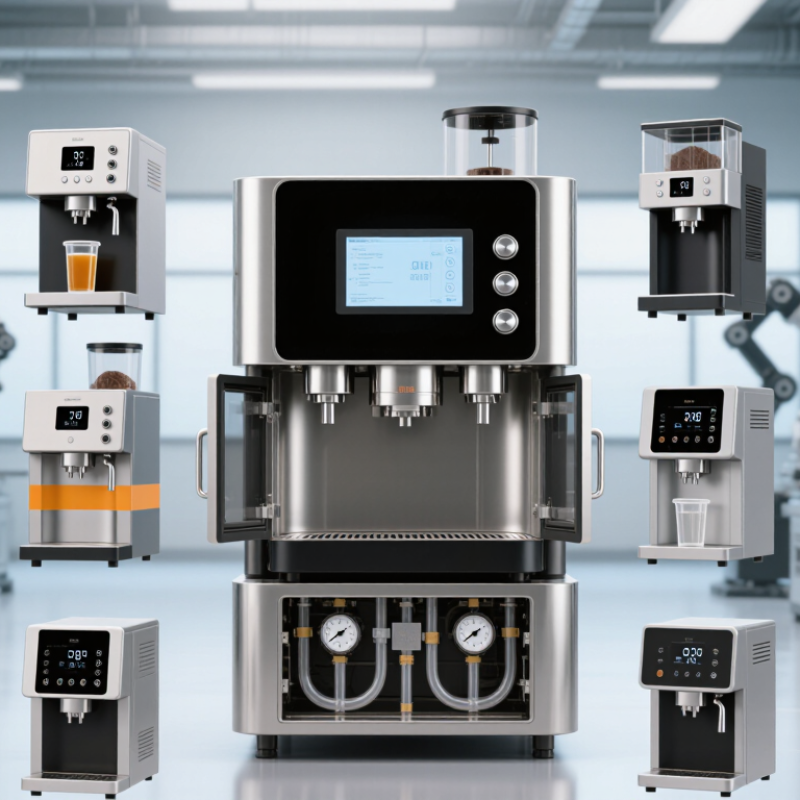
Drink machines cover several distinct equipment types, not one standard product. Packaged-drink vending machines chill and sell sealed bottles or cans. Hot-drink machines brew coffee, tea, or similar beverages to order. Dispensers serve water, juice, or post-mix drinks from connected containers. Frozen-drink machines produce slush-style beverages. The boundaries can blur. A countertop dispenser may also include refrigeration, filtration, or payment controls.
A useful classification considers both what the machine serves and how it operates. Buyers can compare countertop and floor-standing units, refrigerated and ambient models, and self-service and staff-operated systems. Capacity, serving speed, cleaning access, temperature control, and water supply affect daily use. Small details matter.
NAMA’s 2022 State of the Industry report estimated U.S. convenience-services sales at $26.6 billion, including $18.2 billion from vending. These figures cover more than drink machines, so they show industry scale, not beverage-machine sales alone. That distinction is easy to miss.
For a reliable comparison, check the machine’s intended drink, installation requirements, and published operating specifications.
China’s drink-machine manufacturing has changed from assembling basic fillers into building integrated production lines. Early equipment often focused on speed and simple bottle handling. Today, factories can combine rinsing, filling, capping, labeling, and inspection in one line. Stainless-steel frames, programmable controls, and easier cleaning access are now common design priorities. Small details matter. A poorly placed valve can slow sanitation. A sensitive sensor can prevent wasted packaging. This progress reflects stronger component networks and more experience serving different beverage formats, from water to thicker drinks. Yet capability is uneven. Not every supplier offers the same testing depth or engineering support.
Manufacturers increasingly adapt machines to bottle shapes, line speeds, and plant layouts. Some systems use servo drives and touchscreen controls, while others retain simpler mechanisms for easier maintenance. The right choice depends on product viscosity, cleaning routines, floor space, and technicians’ skills. Ask for documented output tests, food-contact material details, and clear spare-parts plans. A polished demonstration is not enough. Real production exposes weak points. China’s industry has become more technically capable, but rapid customization can create trade-offs between delivery time and long-term reliability. Buyers should examine the machine and the service process together. That part is easy to miss.
Annual beverage production offers context for the demand environment in which China’s drink-machine manufacturing industry has developed.
Output is reported in million tonnes for beverage manufacturers above the designated size. It indicates beverage-sector scale, not drink-machine production or sales. Source: National Bureau of Statistics of China.
When comparing Chinese drink machine manufacturers, start with the machine’s actual use. A unit for chilled juice may need different pumps, seals, and temperature controls than one dispensing hot drinks. Ask for capacity figures under stated conditions, not just a headline output rate. Request a sample product test. Real cups matter.
Check materials and cleaning access closely. Food-contact surfaces should have clear material specifications, while removable parts should be easy to inspect and wash. Ask how the machine handles leaks, residue, and repeated cleaning cycles. Small details count. A narrow drain can become a daily frustration.
Reliable evaluation depends on evidence. Review test records, component lists, warranty terms, and spare-parts availability. If possible, inspect a working machine or arrange a factory audit with a qualified technician. Ask who handles installation and response times after delivery. Get those promises in writing. A polished brochure is not proof. Compare the quoted configuration with the machine shown in demonstrations; they may differ. I would still verify local service coverage before placing an order, because a good specification sheet cannot repair a stalled machine.
China’s drink-machine sector includes makers with different strengths, rather than one universal leader. These ten profiles describe useful areas of specialization, not a verified ranking. Profile 1 focuses on vending machines, where payment interfaces and reliable cup dispensing matter. Profile 2 builds commercial coffee equipment, often emphasizing stable temperature and easy cleaning. Profile 3 serves tea shops with machines for measured brewing and adjustable sweetness. Details matter.
Profile 4 specializes in juice dispensers for busy counters, where quick rinsing can reduce downtime. Profile 5 makes filling and capping equipment for packaged drinks. Profile 6 supplies carbonated-drink systems, requiring careful control of pressure and cooling. Profile 7 develops hot-water and beverage stations for offices or cafeterias. Profile 8 targets frozen drinks, where consistent texture depends on mixing and temperature management. Profile 9 produces compact countertop machines for smaller businesses. Profile 10 integrates production lines, connecting filling, labeling, and inspection equipment.
A buyer should compare service coverage, spare-part access, and machine specifications against actual daily demand. Ask for a demonstration using the intended cup, recipe, or container. Inspect cleaning access, noise, and changeover time; brochures rarely show these well. Not every line fits. Some manufacturers may excel at customization but need longer delivery times, so confirm schedules and acceptance tests in writing.
This anonymized overview groups manufacturers by common beverage-equipment specializations. It is not a company ranking, and each profile describes a product category rather than verified specifications for an individual manufacturer.
| Profile | Primary Equipment Category | Typical Beverage Applications | Common Line Stages | Capabilities Often Available |
|---|---|---|---|---|
| Profile 1 | Packaged water filling lines | Still drinking water and purified water | Container rinsing, filling, capping, labeling, and conveying | Integrated line layouts, bottle handling, and options for different container formats |
| Profile 2 | Carbonated beverage filling equipment | Soda, sparkling water, and other carbonated drinks | Product chilling or carbonation integration, counter-pressure filling, capping, and conveying | Equipment designed to limit foaming and retain carbonation during filling |
| Profile 3 | Juice and hot-fill production lines | Fruit drinks, tea drinks, and selected juice beverages | Product preparation, pasteurization or heating, filling, capping, and cooling | Configurations suited to hot-fill processes and compatible bottle materials |
| Profile 4 | Aseptic processing and filling systems | Selected juices, dairy beverages, and shelf-stable drinks | Product sterilization, sterile transfer, container treatment, filling, and sealing | Hygienic process design; system requirements depend on the product and process validation |
| Profile 5 | Can filling and seaming machinery | Carbonated drinks, energy drinks, tea, and other canned beverages | Can handling, filling, seaming, inspection, and conveying | Can-format change parts and integration with upstream or downstream packaging equipment |
| Profile 6 | Glass bottle filling lines | Juice, tea, carbonated drinks, and specialty beverages | Bottle rinsing, filling, closure application, inspection, and labeling | Handling options for reusable or one-way glass bottles, depending on line design |
| Profile 7 | Water treatment and bottling systems | Purified water and water prepared for beverage production | Filtration or membrane treatment, storage, transfer, filling, and packaging | Water-treatment stages selected according to source-water quality and required product specifications |
| Profile 8 | Pouch filling and sealing machines | Juice drinks, flavored water, and liquid refreshments | Pouch feeding or forming, filling, sealing, and finished-pack discharge | Machine configurations for compatible pre-made pouches or form-fill-seal packaging |
| Profile 9 | Cup filling and sealing equipment | Tea drinks, juice, yogurt drinks, and other portion-packed beverages | Cup feeding, filling, lid or film placement, sealing, and discharge | Options for different cup and seal formats, subject to material and machine compatibility |
| Profile 10 | Small-scale and pilot beverage processing equipment | Product development, test batches, and smaller production runs | Mixing, heating or pasteurization, filtration, transfer, and batch filling | Modular setups that can support recipe trials and process development before scale-up |
When comparing China’s drink-machine manufacturers, buyers should look beyond price and factory photographs. Grand View Research valued the global vending-machine market at USD 21.5 billion in 2023. That figure covers vending machines broadly, not drink machines alone, but it signals a competitive market where dependable service matters. Details matter. Request a current ISO 9001 certificate and check that its scope and factory address match the supplier. For machines handling ingredients, review relevant food-safety controls, materials documentation, and destination-market electrical test reports. A certificate is useful, but it does not prove every model was tested.
After-sales support is easiest to judge with specific questions. Who diagnoses a leaking pump? How quickly can the supplier ship a replacement valve, and which parts are stocked locally? Ask for written warranty terms, response times, spare-parts availability, and remote commissioning support. Test the process. A short video call can reveal whether technicians explain a fault clearly or simply forward a manual. A polished audit sheet can still miss delays during peak season; buyers should verify response claims with recent customer references. Compare the same details across shortlisted suppliers, then record them beside price and lead time. That makes trade-offs visible, even when one supplier’s lower quote looks tempting.