Contact Us: 416.615.1555 | sale@booksvendingmachine.com
Choosing the right China best snack vending machine wholesale supplier requires more than comparing prices. A dependable partner should understand product safety, payment security, logistics, and local regulations. The selected snack vending machine must suit its location, customer habits, and maintenance conditions.
Practical experience matters. A reliable supplier can provide clear machine specifications, product videos, factory photos, and test reports. Buyers should examine cooling performance, power consumption, payment options, screen usability, and delivery protection. For example, a machine placed in a university corridor may need a larger spiral capacity and quiet operation. A factory model should also support stable stocking, easy cleaning, and accessible replacement parts.
Small details matter.
Wholesale projects need consistent communication. The supplier should explain production timelines, warranty coverage, software updates, and after-sales support without vague promises. Certifications must match the destination market, and import documents should be checked carefully. Food products, electrical systems, and payment devices may follow different local requirements.
The word “best” can be misleading. No supplier fits every budget, climate, or sales plan. A low quotation may hide expensive maintenance or limited technical support. Even experienced buyers can overlook delivery damage, interface language, or refund settings. Sample testing is often wiser than trusting polished photographs. By comparing real performance, transparent documentation, and long-term service, businesses can identify a China supplier that supports dependable snack vending machine operations.
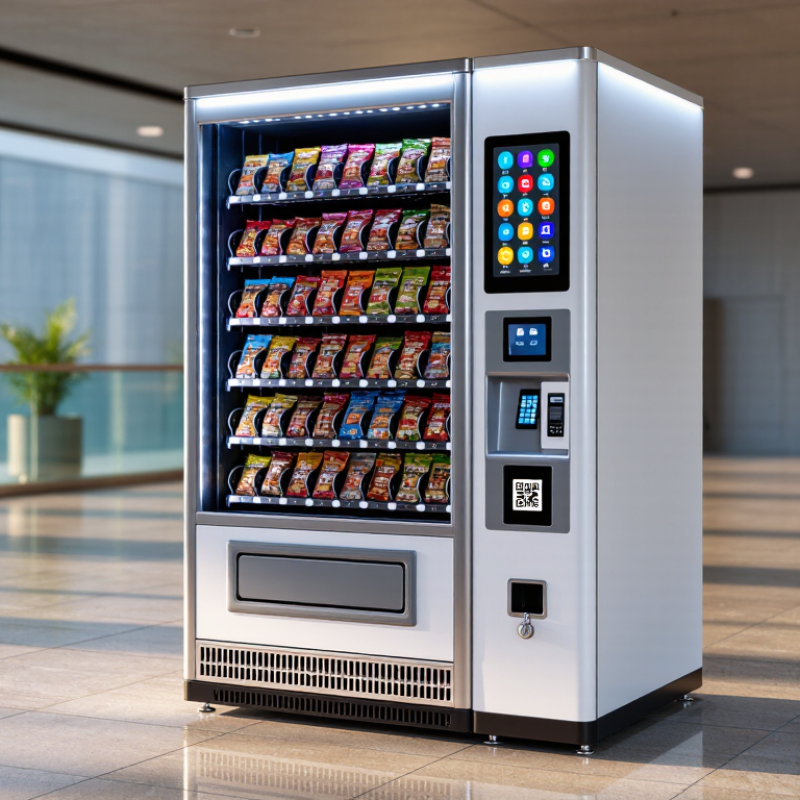
Snack vending machines vary by product range, footprint, and operating environment. Spiral machines suit packaged snacks such as chips, biscuits, and candy. Locker-style models protect fragile items and support larger packages. Combination machines add bottled drinks, creating a more complete retail point. Refrigerated sections are useful for fresh snacks, but they require stricter temperature monitoring.
Capacity affects sales and replenishment work. Compact units may hold 30 to 60 selections, while larger models provide more rows and product variety. A practical wholesale evaluation should examine tray spacing, motor reliability, loading access, and energy use. Twenty-four-hour retail functions may include cashless payment, age-appropriate product controls, remote stock alerts, LED lighting, and automatic temperature protection. These features reduce routine visits, although no system removes every maintenance risk. That part is often underestimated.
Tips: Match capacity to foot traffic, not personal preference. Test product sizes before ordering. Place high-demand items near eye level. Ask for service records, warranty terms, spare-part availability, and software support. A pilot installation can reveal poor lighting, weak network coverage, or slow dispensing. Small issues matter. Reliable suppliers should provide clear specifications, sample testing, installation guidance, and documented after-sales procedures. Mistakes still happen, especially when buyers choose the largest machine without studying the location.
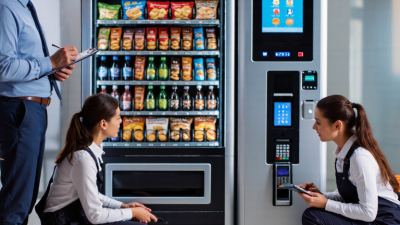
China’s vending market is expanding, but machine density remains uneven. Major transport hubs, office parks, universities, hospitals, and residential communities show stronger demand. Smaller cities often have fewer machines and less predictable purchasing patterns. This gap creates room for carefully planned wholesale deployment.
Recent sales growth is supported by mobile payments, compact retail spaces, and longer operating hours. Consumers can buy water, milk drinks, snacks, and ready-to-eat foods within seconds. Yet convenience alone is not enough. Many shoppers compare prices closely and expect clean machines, visible product dates, and reliable temperature control. They also show growing interest in low-sugar drinks, smaller portions, regional flavors, and healthier snacks.
For suppliers, sales data should guide every product list. A campus machine may need affordable snacks and quick breakfast items. An office location may perform better with coffee, nuts, and lighter meals. Refill frequency matters. So does the distance between machines and warehouses. Poor route planning can erase the profit from strong sales.
The market is promising, though not effortless. A machine can look busy and still lose money. Weather, school holidays, construction, and local habits can change demand quickly. Suppliers should test locations, review weekly data, and adjust stock without relying on national averages. Small mistakes remain common. Careful field experience makes expansion more dependable.
China’s vending density, retail sales growth, and consumer demand indicators, 2019–2023
China’s vending-machine density increased steadily during 2019–2023, while total retail sales recovered strongly after the 2020 disruption. The combination of higher machine penetration, demand for convenient purchases, and growing acceptance of unmanned retail supports continued opportunities for snack vending machines in offices, campuses, transport hubs, residential communities, and commercial facilities.
Sources: National Bureau of Statistics of China for annual retail-sales growth; vending-density figures are industry estimates calculated from publicly reported machine-installation ranges and China population data.
China Best Snack Vending Machine Wholesale Supplier
Reliable snack vending machines depend on more than attractive cabinets. MDB compatibility supports communication between the controller, payment device, and peripherals. DEX enables structured sales and inventory records for auditing. These interfaces reduce manual errors, but poor wiring can still interrupt transactions. Field testing matters.
4G telemetry gives operators remote visibility into stock levels, temperature, faults, and sales. The GSMA Mobile Economy Asia Pacific 2024 report highlights continued expansion of mobile connectivity across the region. That supports cellular monitoring in locations where fixed networks are impractical. However, signal strength varies inside malls, stations, and concrete buildings. A supplier should provide antenna testing, data security controls, and offline storage.
Temperature control is equally important for snacks containing chocolate, nuts, or filled products. A 5–35°C operating range suits many indoor and semi-outdoor installations. It does not replace product-specific storage guidance. Energy performance also deserves measurement. The U.S. Department of Energy notes that refrigeration efficiency depends heavily on ambient conditions and component design. Practical tests should record recovery time, power use, and temperature stability. Results may look less impressive than laboratory claims. That is useful. Wholesale buyers should request MDB and DEX test records, 4G coverage checks, and temperature logs before placing large orders.
| Technical Dimension | Recommended Wholesale Benchmark | Verification Method | Commercial Relevance |
|---|---|---|---|
| Machine Type | Ambient snack vending machine with spiral or conveyor delivery | Review product specification and perform a test vend with representative packages | Suitable for packaged snacks, confectionery, biscuits, and other non-refrigerated products |
| Temperature Operation | 5–35°C ambient operating range | Run the machine at the stated temperature limits and confirm payment, cooling fans, display, and dispensing functions | Supports indoor and semi-sheltered placements in common commercial environments |
| Payment Interface | MDB-compatible payment bus, with support for cashless payment peripherals | Check MDB communication, device recognition, payment approval, vend command, and refund behavior | Simplifies integration with card readers, mobile-payment terminals, and bill or coin systems |
| Data Audit Interface | DEX/UCS support for electronic sales and machine audit data | Export audit records and compare sales, cash, vend, refund, and error totals with the controller records | Improves reconciliation, route accounting, and operational transparency |
| Remote Telemetry | 4G cellular connectivity with remote monitoring and configuration capability | Verify network registration, signal reporting, heartbeat interval, remote status access, and alarm transmission | Enables inventory planning, fault response, sales monitoring, and fewer unnecessary service visits |
| Telemetry Events | Vend results, stock status, door opening, temperature status, power loss, and fault alarms | Trigger each event during acceptance testing and confirm receipt in the management platform | Provides actionable information for replenishment and preventive maintenance |
| Product Capacity | Approximately 30–60 selections, depending on cabinet layout and package dimensions | Confirm the number of columns, shelf positions, motor spacing, and actual package compatibility | Allows product assortment to be adapted to location traffic and package size |
| Product Weight Range | Typically suitable for individual packaged items of about 20–500 g, subject to the delivery mechanism | Test the lightest, heaviest, narrowest, and largest planned products | Reduces failed vends caused by unsuitable product dimensions or weight distribution |
| Display and User Interface | Digital product selection interface with clear pricing, availability, and transaction status | Test selection, price display, payment prompts, successful-vend message, and error messages | Reduces user confusion and supports multilingual or location-specific configuration |
| Delivery Reliability | Target successful delivery rate of at least 98% under controlled test conditions | Conduct repeated test vends using different products and record successful delivery, refund, and jam events | Directly affects customer satisfaction, revenue retention, and service workload |
| Electrical Input | Common commercial supply: 100–240 VAC, 50/60 Hz, subject to the configured market version | Confirm the rating plate, documentation, plug standard, fuse protection, and electrical safety test report | Supports deployment across multiple electrical markets when correctly configured |
| Cabinet Construction | Powder-coated steel cabinet with impact-resistant transparent product window | Inspect panel thickness, coating quality, door alignment, lock operation, and window condition | Supports durability, security, and a professional appearance in high-use locations |
| Maintenance Access | Front-access service area with modular motors, controller, payment interface, and communication components | Measure access time for motor replacement, jam clearance, telemetry inspection, and controller reset | Shortens downtime and improves the efficiency of field-service teams |
| Safety and Protection | Overcurrent protection, grounded metal enclosure, door security, and safe low-voltage control circuits | Review electrical test records and inspect grounding, insulation, fuse protection, and lock construction | Reduces operational risk and supports compliance review before deployment |
| Wholesale Acceptance Package | User manual, wiring diagram, MDB/DEX documentation, spare-parts list, test report, and packing record | Check document completeness against the purchase order before shipment | Improves installation consistency, training, warranty handling, and fleet rollout |
Note: Performance ranges are practical procurement benchmarks. Final specifications should be confirmed against the selected machine configuration, local electrical requirements, payment hardware, product dimensions, and site conditions.
Choosing a wholesale snack vending machine supplier requires more than comparing prices. Compliance documents should match the machine model, production site, and destination market. CE marking can indicate conformity with applicable European safety and electromagnetic requirements. RoHS supports restrictions on hazardous substances in electrical components.
ISO 9001 shows that the supplier operates a documented quality management system. It does not guarantee perfect machines. Ask for the certificate scope, issuing body, and validity date. Request production records, electrical test reports, wiring diagrams, and spare-parts procedures. Small details matter. A loose connector can stop a machine during a busy afternoon.
HACCP controls are especially important for machines selling packaged food. The supplier should identify risks during storage, loading, cleaning, and maintenance. Stainless steel contact areas need clear cleaning instructions. Temperature monitoring may be necessary for selected products. Ask how damaged packages, expired items, and pest risks are handled. I have found that practical records often reveal more than polished brochures. Some suppliers provide excellent certificates but weak after-sales documentation. That gap deserves careful review. Photographs, batch logs, factory inspections, and sample testing can build stronger confidence before a large order. Reliable communication also matters when local electrical standards, payment terms, or installation conditions differ.
Wholesale Selection: MOQ, FOB Pricing, Warranty, Spare Parts, and ROI Metrics
Wholesale decisions should begin with MOQ, not appearance. A practical first order may include 5–20 machines, allowing operators to test locations without freezing too much capital. Request FOB pricing with a clear breakdown for the machine, payment terms, packaging, and port handling. NAMA’s 2022 Industry Census reported approximately $18.5 billion in U.S. vending sales for 2020, showing strong demand but also intense location competition.
Warranty terms deserve close inspection. A reliable contract should define coverage length, response time, excluded parts, and remote troubleshooting. Ask for a spare-parts list before shipment. Common essentials include motors, control boards, sensors, locks, cooling fans, and payment modules. Three percent of the order value reserved for parts may be sensible, although this depends on climate and usage.
ROI calculations must use real site data. Track daily transactions, average ticket size, electricity, commission, delivery, and maintenance costs. Grand View Research identifies cashless payment adoption as a major vending market growth factor. That matters because faster checkout can improve turnover, but transaction fees reduce margins. A simple model should show payback under low, expected, and high sales scenarios. The weak point is often optimistic foot traffic. Test one location first.