Contact Us: 416.615.1555 | sale@booksvendingmachine.com
Why Choose an Inflatable Boat Platform for Global Buyers?
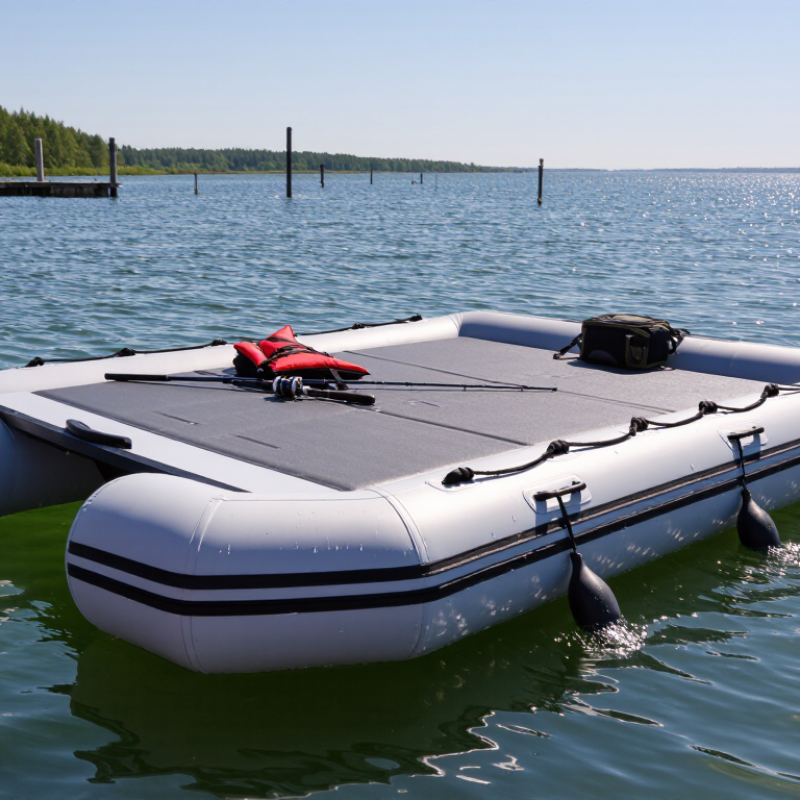
For global buyers, an Inflatable Boat Platform can offer practical mobility without the weight of a rigid deck. It packs into a manageable bag, travels more easily, and suits storage-limited homes, marinas, and service vehicles. A typical platform may include welded seams, reinforced lifting handles, a non-slip surface, and separate air chambers. These details matter when users carry equipment across a wet dock or step aboard with muddy shoes.
Real value depends on more than appearance. Experienced buyers should examine the fabric grade, seam construction, valve quality, pressure guidance, and stated load capacity. Request product drawings, inspection records, warranty terms, and clear maintenance instructions. Reliable suppliers should explain how the platform performs in changing temperatures, saltwater, and repeated inflation cycles. They should also provide materials information and documentation supporting applicable regional safety requirements.
It is not perfect everywhere.
An inflatable design may flex under concentrated loads, feel less rigid than aluminum, and require regular pressure checks. That limitation deserves honest attention. Still, correct loading and careful inspection can reduce avoidable problems. Before purchase, compare packed dimensions, repair support, replacement parts, and delivery arrangements. A carefully selected Inflatable Boat Platform can support fishing, transport, emergency access, and marine work across many markets. The best choice is not always the cheapest one. It is the option with transparent specifications, tested construction, and support that remains available after delivery.
Why Choose an Inflatable Boat Platform for Global Buyers?
An inflatable boat platform offers practical buoyancy, compact storage, and easier transport for many users. However, selection should begin with design category, not appearance. ISO 6185-1 focuses on small inflatable boats and separates designs by intended propulsion. Category I generally covers boats without an engine. Category II covers boats designed for limited engine power, up to 4.5 kW. This distinction affects transom strength, stability, fittings, and operating instructions.
A global buyer should compare the platform’s tested configuration with its real operating plan. A model used for calm-water fishing may need different features from one used for passenger transfers. Check tube diameter, air-compartment separation, floor stiffness, drain design, and rated load. These details become important when the platform carries wet equipment or several occupants. Do not treat ISO 6185-1 as a guarantee for every water condition. It defines construction expectations, but local rules, weather, and operator skill still matter. That part is easy to underestimate.
Tips: Ask for the exact ISO category, rated capacity, maximum engine power, and test documentation. Inspect valves and seams before use. Keep a repair kit onboard. A platform that looks oversized may still have limited payload. Small errors count. Conservative loading is usually wiser than chasing maximum capacity. Also, request clear maintenance guidance from the supplier, because standards cannot replace regular inspection.
Why Choose an Inflatable Boat Platform for Global Buyers?
ISO 6185 power bands help match an inflatable platform to real operating conditions. Boats rated at 4.5 kW or less suit tenders, fishing trips, and sheltered water. They are easier to lift beside a dock. A small outboard, compact fuel system, and lower transport weight also reduce handling effort. NMMA’s 2023 U.S. Recreational Boating Statistical Abstract recorded about 11.6 million registered recreational boats. That scale shows why portable platforms remain commercially relevant.
The 4.5–15 kW range offers a practical middle ground. It fits family cruising, coastal support, and short-distance work in moderate weather. Choose reinforced tubes, a rigid floor, and a transom designed for the rated load. A 15 kW engine can create strong acceleration, but payload, trim, and sea state still control safety. More power is not automatically better. A tidy specification can still mislead.
For ≥15 kW, buyers should examine ISO 6185 Part 3 requirements and the complete certification file. These platforms need stronger transoms, reliable steering, adequate flotation, and carefully tested weight distribution. ICOMIA’s Global Recreational Boating Statistical Report shows that recreational boating demand varies widely by region and vessel type. Local water conditions matter more than catalog speed. In field use, a heavily loaded boat may plane poorly, even with a powerful engine. That is where many purchasing assumptions fail. Always compare rated power, maximum payload, tube diameter, floor construction, and intended water category before selecting a global configuration.
Matching global use cases to ISO 6185 power-planning bands: ≤4.5 kW, 4.5–15 kW, and ≥15 kW.
Lower-power platforms are suitable for sheltered waters, fishing, tender duty, and easy transport. The 4.5–15 kW range supports general coastal recreation and short-distance cruising, while platforms rated at 15 kW or more are better suited to heavier payloads, longer passages, and more demanding open-water operations. Power equivalents use 1 kW ≈ 1.341 horsepower.
For global buyers, fabric choice controls durability, pressure retention, and repair time. PVC is usually lighter and more affordable. Its heat-welded seams can create consistent airtight joints. However, ASTM D751 coated-fabric testing shows performance depends heavily on coating thickness, yarn strength, and seam construction. Cold climates may expose PVC’s weakness. Repeated folding can cause creases, surface cracking, and gradual plasticizer loss.
CSM fabric generally resists ultraviolet exposure, saltwater, oils, and temperature changes more effectively. ISO 4892-3 supports accelerated UV testing, while ISO 188 evaluates heat-aging resistance. These methods do not guarantee identical field results. Storage conditions matter. CSM often retains flexibility longer, supporting steadier pressure during long deployments. Yet its greater weight increases handling effort. Repairs also require cleaner surfaces, compatible adhesive, and longer curing time. PVC patches are usually faster for crews with basic repair tools.
Pressure loss is not only a fabric issue. Valve quality, seam workmanship, air temperature, and loading all matter. ISO 6185-3 emphasizes design and safety verification for inflatable boats, but buyers should request actual pressure-decay records. A small leak can hide beneath a floor or rubbing strip. That detail is easy to miss. My practical preference is PVC for frequent short-term repairs and controlled budgets; CSM suits harsh sunlight, chemical exposure, and long service cycles. Still, field repair data can challenge that preference when workmanship is poor.
An inflatable boat platform should begin with payload, not appearance. ISO 6185 requires manufacturers to state maximum load, passenger capacity, and operating conditions clearly. Buyers should calculate people, fuel, battery, equipment, and water weight together. A 500-kilogram payload can become unsafe when four passengers add uneven weight. Leave practical reserve capacity.
Buoyancy depends on chamber volume, tube diameter, material condition, and inflation pressure. ISO 6185 testing considers flotation and performance under defined loading conditions. Ask for test evidence, not only a capacity label.
The U.S. Coast Guard reported 3,844 recreational boating accidents in 2023. It recorded 564 deaths and 2,126 injuries. These figures show why flotation margins deserve attention. Small details matter, especially during boarding.
Stability is less visible than buoyancy. A wide deck helps, but passenger movement can still shift the center of gravity. Check the platform under asymmetric loading, sudden stops, and moderate waves. ISO 6185 categories distinguish operating environments, so sheltered-water approval should not imply offshore suitability. Some specifications remain vague. That is a warning, not a minor inconvenience. For international buyers, request chamber layout, pressure limits, drain design, repair instructions, and independent inspection records. A useful platform feels predictable underfoot, even when conditions are not.
Why Choose an Inflatable Boat Platform for Global Buyers?
Screen Global Purchases for CE Compliance, Shipping, Warranty, and Spare Parts
A reliable inflatable boat platform starts with documented compliance, not attractive product photos. For European shipments, ask for the Declaration of Conformity, technical file details, safety instructions, and traceable test information. CE marking alone is not enough. The documents should match the exact platform model, materials, and intended use. Requirements may differ by destination, so buyers should confirm local rules before ordering.
Shipping details deserve equal attention. Request the packed length, width, height, gross weight, and carton count. These figures affect freight quotes and customs handling. I also check whether the package includes an inflation pump, repair kit, storage bag, and protective fittings. A small missing item can delay installation for days. It happens more often than expected.
Warranty terms should state coverage, claim procedures, inspection duties, and response times. Ask who pays return freight and whether commercial use changes the warranty. Spare parts must be available beyond the initial sale. Common examples include valves, pressure gauges, patches, ropes, handles, and replacement floor sections. Keep a written parts list before payment. It may feel excessive, but memory is unreliable after a season of use. One weakness remains: even careful screening cannot remove every shipping or maintenance risk.
Global Purchasing Screening Matrix: CE Compliance, Shipping, Warranty, and Spare Parts
| Screening Dimension | Buyer Requirement | Evidence to Request Before Purchase | Practical Benchmark or Data Point | Why an Inflatable Platform Helps | Screening Status |
|---|---|---|---|---|---|
| EU CE Compliance | Confirm whether the boat falls within the scope of the European Recreational Craft Directive. Recreational craft from 2.5 m to 24 m are generally within scope. | EU Declaration of Conformity, CE marking details, owner’s manual, technical documentation, identification plate, and applicable conformity-assessment records. | The documentation should identify the craft model, applicable EU requirements, harmonised standards used, manufacturer or authorised representative, and responsible signatory. | Deflated pontoons and modular components can be inspected, labelled, packed, and documented as a complete product system before dispatch. | Required |
| Product Standardisation | Check construction against an applicable inflatable-boat standard, such as the relevant parts of ISO 6185, where appropriate to the boat type and length. | Test reports or technical files covering buoyancy, design category, materials, valves, handles, towing points, load limits, and operating instructions. | Ask for stated maximum persons, maximum load, maximum engine power, operating category, and recommended inflation pressure in kPa or PSI. | A platform-based product can use repeatable tube diameters, floor modules, valves, and fittings, making configuration checks easier across multiple purchase orders. | Recommended |
| Material Verification | Confirm the fabric type and construction rather than relying only on generic terms such as “heavy-duty PVC” or “marine fabric.” | Material specification, coating information, fabric weight, seam method, adhesive or welding process, UV-resistance information, and batch traceability. | Common commercial inflatable boats use reinforced PVC or coated synthetic fabric; the exact fabric weight and coating structure should match the intended use and climate. | Replaceable or modular tubes, floors, seats, and fittings can reduce the cost of repairing isolated components instead of replacing the entire boat. | Verify |
| Packed Shipping Efficiency | Compare packed dimensions and chargeable weight before selecting courier, air freight, LCL, or full-container transport. | Final packed length, width, height, gross weight, number of cartons, pallet dimensions, HS code, country of origin, and commercial invoice data. | A compact inflatable boat package may be shipped in one or several cartons; the final freight cost depends on actual weight, volumetric weight, destination, and service level. | Deflation and folding can substantially reduce storage and transport volume compared with a rigid-hull boat of similar usable capacity. | Recommended |
| International Shipping Risk | Establish responsibility for export packing, moisture protection, customs documents, damage claims, and destination delivery. | Packing list, commercial invoice, certificate of origin where applicable, transport insurance terms, carton photos, loading photos, and inspection records. | Require internal protection for valves, fins, transom parts, and floor sections. Packaging should be suitable for handling, stacking, and temporary warehouse storage. | Lower package size and modular packing can simplify warehouse handling and support partial replacement when one component is damaged in transit. | Verify |
| Warranty Coverage | Separate coverage for fabric, seams, valves, accessories, and manufacturing defects; define exclusions for misuse, puncture, normal wear, chemicals, and incorrect storage. | Written warranty period, start date, claim procedure, required photos or test results, repair method, replacement policy, and responsibility for return freight. | A commercial benchmark is a clearly written warranty of at least 12 months for manufacturing defects, subject to the agreed terms and local law. | Modular construction can allow a defective tube, valve, seat, or floor section to be repaired or replaced without taking the whole platform out of service. | Required |
| Spare Parts Availability | Confirm that service parts can be ordered after the original purchase and are compatible with the exact model and production version. | Illustrated parts list, part numbers, valve type, repair-kit contents, tube or floor compatibility, recommended stock list, and ordering lead times. | Essential onboard spares commonly include repair patches, compatible adhesive where applicable, valve tools, spare valves, o-rings, inflation adapters, and protective caps. | Standardised modules make it easier to maintain a small inventory of commonly used parts across different boat sizes or configurations. | Recommended |
| Repairability in the Destination Market | Evaluate whether local technicians can identify leaks, replace valves, repair seams, and follow the specified adhesive or welding process. | Repair manual, leak-testing procedure, inflation-pressure guidance, seam-repair instructions, compatible consumables, and training material. | The buyer should receive a defined repair process and pressure-check method instead of relying only on general DIY instructions. | PVC or coated-fabric inflatable structures can often be repaired locally when the correct material, tools, and procedure are available. | Verify |
| Configuration and Capacity | Match tube layout, floor type, seating, transom design, person capacity, payload, and engine rating to the intended operating environment. | Dimension drawing, packed and inflated measurements, load plate, capacity statement, floor plan, engine limit, and stability or performance information where applicable. | Capacity must be assessed by the declared load and operating conditions, not by passenger count alone. Payload includes people, equipment, fuel, battery, and accessories. | Modular floors, seats, consoles, and accessories allow buyers to select a configuration without shipping a permanently assembled rigid structure. | Required |
| Storage and Seasonal Use | Check drying, folding, temperature, UV exposure, mildew prevention, and long-term storage requirements. | Cleaning instructions, drying procedure, storage temperature range, recommended folding method, pressure guidance, and protective-bag requirements. | The boat should be completely clean and dry before long-term storage; folded fabric must be protected from sharp edges, excessive heat, and prolonged direct sunlight. | Deflation enables indoor or compact seasonal storage, reducing the need for a dedicated trailer or large outdoor storage area. | Recommended |
| Pre-Shipment Inspection | Use a documented inspection before final payment or dispatch to reduce compliance, packing, and configuration disputes. | Inspection checklist, serial or batch identification, inflation test record, accessory checklist, dimensions, weight, photographs, and carton condition report. | At minimum, verify appearance, seams, valves, inflation retention, fittings, dimensions, accessories, labels, manuals, and packaging against the purchase specification. | Inflatable platforms can be checked both as individual modules and as a complete assembled system before being deflated and packed. | Required |