Why Choose Car Window Film for Your Vehicle?
Car Window Film is more than a styling choice. On a sunny drive, it can reduce glare, limit solar heat, and help protect the cabin from ultraviolet exposure. The difference is easy to notice: less squinting at the windshield, a cooler steering wheel, and slower fading on seats left beneath bright windows. Results vary by film type, vehicle glass, and installation quality. No film makes every cabin cool.
Darrell Smith, executive director of the International Window Film Association, is an industry voice on window-film performance. A practical paraphrase of the guidance associated with his work is: “Choose film for the problem you want to solve, not just for a darker look.” That distinction matters. A clear, high-performing film may suit a driver seeking heat rejection without a dramatic appearance change. A darker shade is not automatically more effective. Check manufacturer specifications, including visible light transmission and infrared performance, rather than judging by color alone.
Good installation matters, too. Dust trapped near a window edge can catch the light for months. Ask an experienced installer about film options, warranty coverage, and care instructions, and review the vehicle manufacturer’s guidance before choosing. Local requirements can differ, so confirm that a selected shade is appropriate where the vehicle is used. Small details count. Still, window film is not a cure-all: it cannot replace air conditioning or eliminate every glare source. I would also avoid promising a fixed temperature drop; cabin conditions depend on the car, weather, and parking exposure. A thoughtful choice starts with your daily drive.
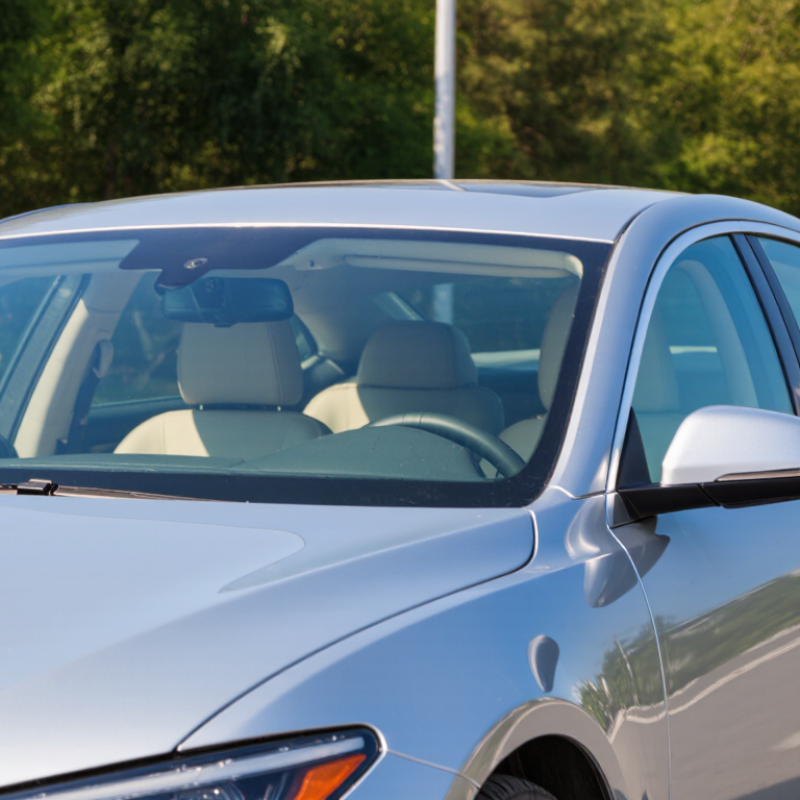
What Car Window Film Is and How It Works
Car window film is a thin, multilayer sheet attached to the inside of a vehicle’s glass. Most films use a polyester base, with an adhesive beneath and a protective coating facing the cabin. Depending on its construction, the film may contain dyes, metal particles, or ceramic materials. Each type handles sunlight differently.
A thin, bonded layer. As sunlight reaches the window, the film can absorb or reflect some solar energy and block much of the ultraviolet radiation. Visible light still passes through, though the amount depends on the film’s shade and composition. Darker film does not automatically mean better heat control; appearance and performance are separate factors. Results also vary with the glass, sunlight angle, and vehicle interior.
During installation, a technician cleans the glass, trims the film, and smooths it into place. Small water droplets or a hazy look may appear while the adhesive cures, so the surface needs time to settle. The effect is useful, but not magic: film cannot prevent all cabin heating or repair damaged glass. I would also check how the film looks from inside, since reduced glare can sometimes mean reduced visibility in dim conditions.
Why Choose Car Window Film?
What car window film is and how it works
Window film is a thin layer applied to vehicle glass. Depending on its construction, it can absorb or reflect portions of incoming sunlight. This chart shows the approximate distribution of solar energy reaching Earth’s surface: film can help reduce UV exposure and solar heat, while its visible-light transmission affects cabin brightness. Actual performance varies by film, glass, and conditions.
How Window Film Reduces Heat, Glare, and UV Exposure
Why Choose Car Window Film for Your Vehicle?
How Window Film Reduces Heat, Glare, and UV Exposure
Sunlight through side windows can turn a commute into a hot, squinting ride. Window film can reduce solar heat and harsh glare, helping the cabin feel more comfortable. Its performance depends on the film, glass, and installation, so results vary. It is not magic, and air conditioning may still be needed.
UV protection matters, too. A 2016 JAMA Ophthalmology study of 29 vehicles found that windshields blocked an average of 96% of UVA radiation, while driver-side windows blocked about 71%. The International Window Film Association says many quality films can block up to 99% of UV radiation. Check the product’s tested specifications rather than assuming every film performs alike. Comfort is only part of the picture.
Tips: Ask for documented heat and UV performance, and keep the film clean with a soft cloth. Consider how glare changes on your usual route. One small caveat: darker film does not automatically mean better heat rejection.
How Film Can Improve Privacy and Protect Vehicle Interiors
Privacy is one practical reason to add window film. It can make bags, electronics, and paperwork less visible from the sidewalk. That small change may reduce casual attention when a vehicle is parked. Film does not create complete privacy, though. At night, a brightly lit cabin can remain visible through darker glass. Not a one-way mirror.
Interior protection matters too. Sunlight can fade upholstery, dry some materials, and warm the seats and dashboard. A 2016 study in JAMA Ophthalmology tested 29 vehicles and found that windshields blocked an average of 96% of UVA, while side windows blocked 71% on average. The side-window results varied widely, from 44% to 96%. These measurements describe factory glass, not every film product. The International Window Film Association reports that automotive films can block up to 99% of UV radiation, depending on the film. UV reduction helps, but it cannot prevent all fading; visible light and heat also affect interior materials. Look for product-specific test data, and consider how the cabin looks after several hours in direct sun.
Why Choose Car Window Film for Your Vehicle? - How Film Can Improve Privacy and Protect Vehicle Interiors
| Dimension | Typical Film Performance | How It Can Help | Important Consideration |
| Daytime privacy | Darker films reduce how easily people can see into a vehicle in many daytime conditions. | Can make passengers and belongings less visible from outside. | Privacy depends on lighting: when the interior is brighter than the exterior, such as at night, people may be able to see in. Tint does not provide complete privacy. |
| Visible light transmission (VLT) | Automotive films are available in a range of VLT levels; lower VLT means less visible light passes through. | Lets drivers choose a balance between cabin brightness, outward visibility, and privacy. | Check local rules before installation. Legal limits can differ by window position and jurisdiction, and the factory glass also affects the final VLT. |
| Ultraviolet (UV) protection | Some automotive films are rated to block up to 99% of UV radiation; actual performance varies by film and installation. | Can reduce UV exposure through treated windows and help limit one contributor to fading and material deterioration. | UV protection does not prevent all fading. Visible light, heat, and the materials themselves also affect interior aging. |
| Heat and solar energy | Solar heat reduction varies substantially with film construction, glass type, and the amount of sunlight. | A suitable film can reduce solar heat entering through treated windows, improving comfort in sunny conditions. | Compare stated solar-energy performance for the specific film and glass combination. A film’s infrared rejection figure alone does not describe total heat reduction. |
| Interior protection | Protection depends on the film’s UV and solar-control properties, the vehicle’s exposure, and the materials inside. | May help slow fading, drying, or heat-related wear on upholstery, dashboards, and other interior surfaces. | Film helps reduce exposure but cannot stop all aging. Parking in shade and using a sunshade can provide additional protection. |
| Glare reduction | Darker films reduce visible light and can reduce glare; the effect depends on tint level and viewing conditions. | Can make bright daylight more comfortable for occupants. | Very dark films can make it harder to see in low light. Maintain clear visibility through the windscreen and windows as required by local law. |
| Glass and installation | Performance and appearance depend on film quality, correct fit, glass condition, and professional installation. | A properly installed film can provide a more even finish and more predictable performance. | Ask for specifications for the exact film and confirm compatibility with the vehicle’s glass, sensors, and defroster lines. |
How to Choose the Right Film and Check Local Tint Laws
Choosing car window film starts with the problem you want to solve, not the darkest sample. Visible light transmission, or VLT, describes how much light passes through the glass; a lower percentage means a darker view. But darkness alone does not show how well a film reduces heat. Compare documented heat-rejection figures and UV protection, then consider how the film looks from the driver’s seat at dusk. That matters. Some metal-based films may affect electronic signals, so check compatibility if your vehicle relies on built-in antennas or toll devices. A sample beside the window can help, though it cannot fully reproduce nighttime visibility.
Tint laws vary by location, window, and vehicle type. Check your local transport authority’s current guidance before buying, including rules for windshield strips, reflectivity, and any medical exemptions. Pay attention to factory-tinted glass: added film can make the finished window darker than expected. Check twice. Ask an installer for the film’s VLT specifications, but verify the legal limit independently rather than relying on a verbal assurance. Keep the product details and receipt with your vehicle records. Even careful planning can miss a small rule change, so confirm requirements again before installation.
What to Expect from Installation and Ongoing Care
A careful installation begins with clean glass, precise measurements, and a discussion of your driving needs. The installer may remove door panels or trim to reach the glass edges. Film is cut, shaped, and applied with a solution that helps position it smoothly. Expect some moisture or haze at first. It usually clears as the film cures, though timing depends on the film and conditions. Ask when you can lower the windows; rushing that step can shift the edges.
Tips: Keep the windows closed for the period your installer recommends. Use a soft microfiber cloth and a mild, ammonia-free cleaner. Avoid scraping the film with sharp tools.
After installation, small water pockets may remain temporarily, but bubbling or peeling that persists deserves a follow-up with the installer. For routine care, wipe gently rather than pressing hard near the edges. A clean, dry cloth helps prevent grit from scratching the surface. Results can vary with glass shape, film type, and workmanship, so inspect the windows in daylight before leaving. I’ve found that a quick check of the corners is easy to forget, yet those details matter over time. Window film can reduce glare and solar heat, but it does not eliminate either completely.