What Are the Top Sintered Stone Manufacturers in China?
China has become a major force in the global sintered stone industry. Its factories combine advanced pressing systems, digital printing, and large-scale quality control. Yet choosing a manufacturer requires more than comparing surface patterns or factory size.
Eduardo Cosentino, president of Grupo Cosentino, once said, “We are not a stone company; we are a surface company.” This statement captures an important market shift. Sintered stone is no longer judged only by appearance. Buyers now examine slab density, water absorption, thermal resistance, edge quality, and production consistency.
This guide reviews leading Chinese manufacturers, including New Pearl, Monalisa, Oceano, KITO, and other established producers. Their strengths differ. Some focus on architectural slabs, while others serve furniture, kitchens, bathrooms, and outdoor applications. Factory automation matters. So do testing laboratories, export experience, packaging systems, and after-sales support.
Look closely.
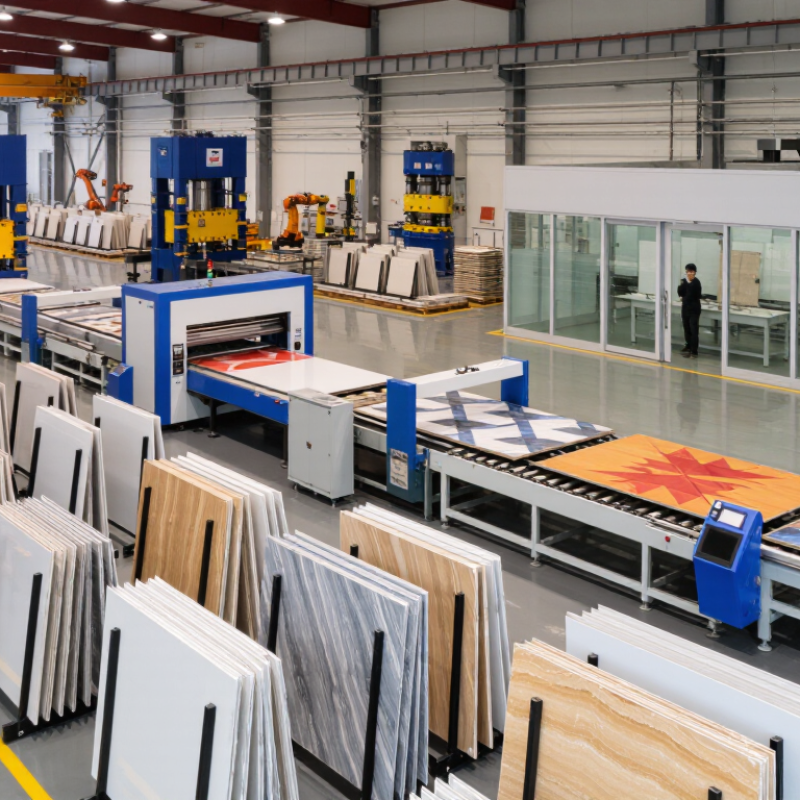
A polished showroom cannot prove long-term reliability. Buyers should request technical data, batch samples, test reports, and installation references. Visiting a production line can reveal details that brochures often hide, such as chipped edges, uneven calibration, or inconsistent color control.
No ranking is completely objective. Price, production capacity, design development, and regional service can change the result. A manufacturer suitable for a hotel project may not fit a small residential order. This article therefore compares practical indicators rather than making a careless universal judgment.
The strongest sintered stone suppliers are not always the largest. They are the companies that deliver stable quality, transparent documentation, and dependable communication over time.
What Is Sintered Stone and Why Is China a Major Producer?
Sintered stone is an engineered slab made from refined minerals, pigments, and intense heat. Manufacturers press the mixture before firing it above 1,200°C. The result resembles natural stone, yet offers low water absorption, strong scratch resistance, and stable color. It suits kitchen counters, wall panels, floors, and outdoor applications. Still, quality varies significantly between production lines.
China became a major producer because it combines mineral resources, large ceramic clusters, skilled technicians, and extensive kiln capacity. The China Building and Sanitary Ceramics Association reported China’s annual ceramic tile output at roughly 6.7 billion square metres in 2023. That industrial foundation supports sintered stone production, cutting, glazing, and export logistics. China also benefits from dense supplier networks. Slabs, molds, packaging, and testing services can operate within short transport distances.
Leading Chinese manufacturers usually compete through slab thickness, surface consistency, digital printing, and automated inspection. The market remains difficult to compare. Grand View Research and other industry reports use different definitions for sintered stone, porcelain panels, and engineered slabs. Their market estimates therefore differ. Buyers should request water-absorption results, bending-strength data, batch records, and third-party test reports. A polished sample is not enough. I would also inspect edge quality after cutting. Small defects often appear there. Chinese production is highly capable, but capacity alone does not guarantee dependable performance.
How to Evaluate China’s Top Sintered Stone Manufacturers
Evaluating China’s top sintered stone manufacturers requires more than comparing glossy samples. A reliable supplier should show factory experience, documented quality controls, and consistent slab performance. The European Commission’s Joint Research Centre identifies durability and resource efficiency as important factors in ceramic-based construction products. These principles also apply to sintered stone.
Request test reports for water absorption, flexural strength, abrasion resistance, and thermal shock. ISO 13006 classifies porcelain products with water absorption below 0.5%, although sintered slabs may follow additional specifications. ASTM C373 and ASTM C648 offer useful testing references. Ask whether reports cover the exact thickness, finish, and production batch. Generic certificates are weak evidence.
Audit the production line if possible. Check pressing equipment, firing temperatures, polishing controls, packing methods, and rejected-slab records. A factory should explain its inspection frequency, not only display a certificate. Grand View Research valued the global ceramic tiles market at approximately 227.8 billion US dollars in 2023, showing the scale of this sector. However, market size does not prove individual reliability. A smaller producer may deliver better batch control.
Test full-size samples before signing a contract. Inspect edge chipping, shade variation, flatness, and crate protection after transport. The first sample can deceive. I have learned that beautiful surfaces often hide weak packaging or unstable calibration. Environmental claims also need evidence, such as energy records, recycled-content data, and verified environmental declarations. Prices matter, but replacement costs matter more.
How to Evaluate China’s Top Sintered Stone Manufacturers
Common slab thickness options are useful for comparing a manufacturer’s production range and application coverage. Typical sintered stone products are supplied in thicknesses such as 6, 9, 12, 15, and 20 mm for wall panels, countertops, furniture, flooring, and other architectural uses. Buyers should also verify testing standards, dimensional consistency, customization capability, export experience, and quality-control documentation.
Which Chinese Manufacturers Lead in Quality, Scale, and Innovation?
China’s leading sintered stone manufacturers are not defined by size alone. The strongest producers combine stable raw materials, precise pressing, and disciplined firing control. Large integrated factories often lead in output, color consistency, and project delivery. Their automated lines can produce slabs with uniform thickness, clean edges, and fewer surface defects.
Innovation is more visible in manufacturers with dedicated testing teams. They develop lighter slabs, deeper textures, anti-slip finishes, and improved large-format strength. Some factories also invest in digital cutting, robotic polishing, and energy-saving kilns. However, a polished showroom sample proves little. Batch records, water absorption results, flexural strength data, and third-party test reports deserve closer attention. No factory performs perfectly in every category. That is worth remembering.
Tips: Request samples from different production batches. Check slab flatness under direct light. Inspect the back surface for uneven particles or cracks. Ask how defects are handled before shipment. A reliable supplier should explain its inspection process clearly, provide traceable documentation, and support independent factory audits. Visit the production floor when possible. Dust control, kiln maintenance, worker training, and packaging quality often reveal more than promotional claims. Ask difficult questions. Good manufacturers will answer with measurements, not vague promises.
What Products and Applications Do These Manufacturers Offer?
Leading sintered stone manufacturers in China produce more than polished slabs. Their main products include large-format panels, kitchen worktops, bathroom counters, wall cladding, flooring, stair pieces, and outdoor paving. Some factories also process matching sinks, tables, cabinet doors, and custom furniture surfaces. Thicknesses commonly range from thin decorative panels to heavier structural surfaces. Finishes may include matt, polished, textured, concrete-look, marble-look, and stone-grain designs.
These products serve homes, hotels, restaurants, offices, retail spaces, and public buildings. A kitchen worktop needs low water absorption and strong resistance to heat, stains, and scratches. Bathroom panels reduce grout lines around showers and vanity areas.
Large wall panels can create a continuous stone effect in hotel lobbies. Outdoor paving requires suitable slip resistance and reliable performance under changing temperatures. Cutting services may include CNC shaping, edge profiling, drilling, and waterjet work.
Reliable manufacturers usually provide technical data, sample approval, batch inspection, and installation guidance. Buyers should check test reports rather than trust attractive images. Ask about dimensional tolerance, color variation, packaging, replacement policies, and after-sales support. These details affect real project costs. No supplier is perfect. A beautiful slab can still fail when the substrate is uneven or the installer lacks experience. I would request a trial piece before approving a large order, especially for book-matched patterns or exterior applications. Some specifications also need clearer explanation, because marketing language can sound more precise than the actual test evidence.
How to Choose the Right Chinese Sintered Stone Manufacturer?
Choosing a Chinese sintered stone manufacturer requires more than comparing online prices. Request the factory address, production flow, and recent quality records. A serious supplier should explain raw material control, pressing pressure, firing temperature, and slab thickness tolerance. Ask for full-size samples, not only small chips. Inspect surface flatness, edge quality, veining continuity, water absorption data, and resistance test reports. Factory experience matters. So does transparent communication.
During a video or physical audit, watch how slabs move from the kiln to the polishing line. Check whether workers record defects or simply hide them. Ask for batch numbers, packing photos, and container-loading procedures. Confirm export documents, applicable product standards, and independent inspection options. A reliable manufacturer will provide clear answers without promising perfect uniformity. Natural-looking patterns can vary. That is normal. However, major color differences between approved samples and production slabs need written control.
Compare quotations carefully. Include thickness, dimensions, surface finish, packaging, replacement terms, and delivery schedules. A low price may exclude corner protection or testing. Request a pilot order before committing to a large project. Measure several delivered slabs and photograph defects immediately. I have learned that trust develops slowly, and even careful buyers miss details. Leave room for questions. If the supplier welcomes independent inspection, shares corrective-action records, and accepts reasonable feedback, it provides stronger evidence of professional reliability.