2026 Top Live Translation Earbuds for Global Buyers
Live Translation Earbuds are moving from travel novelty to practical tools for meetings, trade shows, and everyday conversations. For global buyers, the real test is not a polished product demo. It is whether speech stays clear in a busy airport, a crowded café, or a fast-moving discussion. Speech-translation researcher Dr. Alexander Waibel’s work reflects a useful principle: “Good translation carries meaning, not merely words.” Buyers should judge devices by that standard, not by language-count claims alone.
This 2026 guide compares leading models through the details that shape real use: translation delay, supported languages, microphone performance, comfort, battery life, and app requirements. A half-second pause can change a conversation’s rhythm. So can a mistranslated product name. We also consider how clearly each brand explains offline features, privacy settings, and software support. Check the fine print.
No earbud handles every accent, noisy room, or technical term perfectly. That matters. I would treat translation as assistance, not a substitute for checking important details with a fluent speaker. The comparisons ahead aim to help buyers match features to their needs, whether they travel occasionally or speak with international clients each week. We note practical trade-offs where available, while recognizing that performance can vary by language pair, phone, and connection. A small test before a major meeting is still wise.
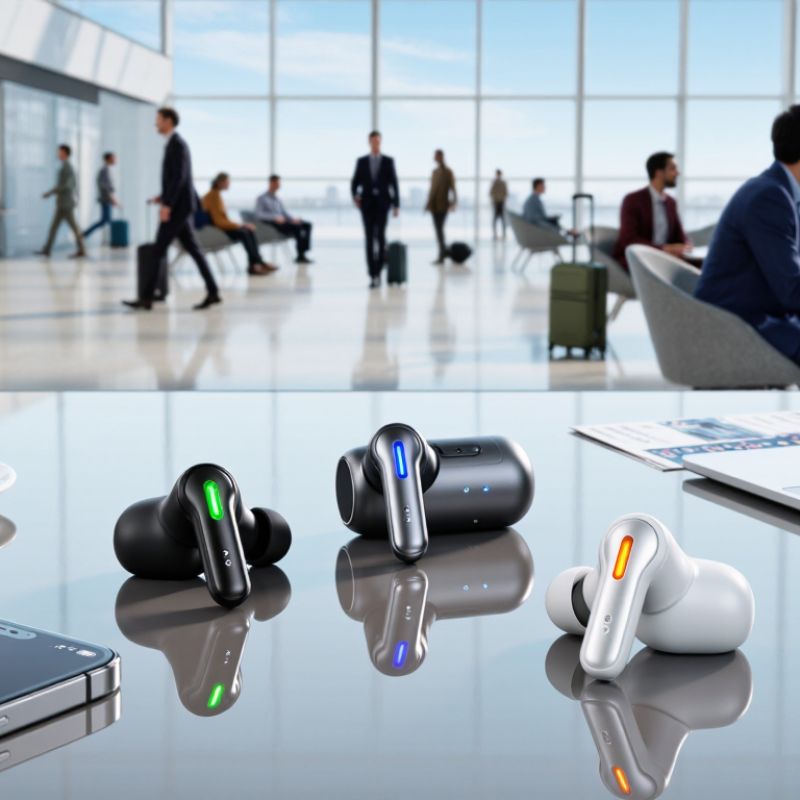
Live Translation Earbuds: Definition, Components, and Global Uses
Live translation earbuds are wireless listening devices that convert spoken language into another language during or shortly after a conversation. A microphone captures speech, software identifies and translates it, and a speaker delivers the result. Some systems rely on a paired phone and internet connection; others offer limited offline functions. Accuracy and speed vary with accents, background noise, language availability, and network quality.
The main components include microphones, speakers, batteries, Bluetooth radios, and translation software. A paired phone often provides the display, processing power, and language settings. In a crowded station, a traveler might hear an announcement, then check translated text because a platform number sounded unclear. Small details matter. A loose fit can affect microphone pickup, and names or numbers may be mistranslated. These devices are useful, not magic.
Global users rely on them for hotel check-ins, market questions, guided tours, and cross-border meetings. Pausing between speakers helps the software separate voices. It also gives people time to check whether a translation makes sense. Jokes and sudden topic changes can still produce awkward results. For sensitive conversations, users should check how audio is processed and stored. Earbuds can open a conversation, but patience and context remain essential; important figures may still need written confirmation.
Language Coverage: Comparing Support with UNESCO’s ~7,000 Living Languages
UNESCO’s language resources describe a world with roughly 7,000 living languages. Translation earbuds cover only a fraction of them. Their language lists can also hide important differences: a device may support a language in one direction, but not the reverse. It may handle typed text better than spontaneous speech. Coverage is not the same as useful conversation.
Picture asking for a bus platform in a crowded station. A familiar language may work well in quiet conditions, yet struggle with regional accents, fast speech, or loud announcements. Check whether the exact language pair supports two-way voice translation, offline use, and dialect recognition. Try short, ordinary phrases—not just polished demonstrations. For less widely supported languages, speech recognition may mistake a local word for a more common one. That limitation deserves attention. A neat coverage number is tempting, but it can conceal uneven performance; even careful comparisons cannot predict every real-world exchange.
2026 Top Live Translation Earbuds for Global Buyers
Language coverage context: device support compared with UNESCO’s estimate of ~7,000 living languages
How to read this: UNESCO estimates that roughly 7,000 living languages are spoken worldwide; the United Nations has six official languages. These are contextual benchmarks, not earbud-support counts. There is no single standardized, independently verified count of languages supported by live-translation earbuds, and coverage can vary by language pair, app, and online or offline mode. Check those details before buying.
Sources: UNESCO — Languages · United Nations — Official Languages
How Translation Works: Speech Recognition, Machine Translation, and Speech Synthesis
2026 Top Live Translation Earbuds for Global Buyers
Live translation earbuds turn spoken conversation into a short chain of audio tasks. A microphone captures a speaker’s words, then speech recognition converts the sound into text. Depending on the device, this step may happen on the earbuds, a paired phone, or a remote service.
Background noise, accents, and overlapping voices can affect accuracy. A clattering café is a harder test than a quiet room. Small pauses matter.
Next, machine translation converts the recognized text into the selected language. It uses context to choose words, but idioms, names, and technical terms can still come out awkwardly. Speech synthesis then reads the translated text aloud through the earbuds or phone speaker. The listening experience depends on voice clarity, timing, and the selected language pair.
Not magic.
A delay of even a few seconds can interrupt a natural exchange, and a mistranslated number may need checking. Before relying on a pair for an important conversation, test the languages you need, try both directions, and listen in a realistic setting. I would still keep the phone screen available; seeing the translated text can reveal a mistake that spoken audio hides.
Performance Benchmarks: Translation Latency, Accuracy, Battery Life, and Bluetooth
For live translation earbuds, latency should be measured from a spoken phrase to the translated audio, not from the moment an app opens. In a quiet room, a useful benchmark is roughly one to two seconds per short turn; crowded cafés can add noticeable delay. Test both directions of a conversation. A half-second difference can feel large when people keep interrupting.
Accuracy needs more than a polished demo. Compare translated meaning across everyday phrases, names, numbers, and unfamiliar accents, then check the result against a human-reviewed transcript. Report the sample size and test conditions, since scores from a handful of scripted lines can mislead. Background chatter matters. So does microphone placement. A dropped article may be harmless, but a changed price or time is not.
Battery figures should reflect translation use, with Bluetooth connected and microphones active—not idle standby. Record continuous session time, case recharges, and performance after several charge cycles. Bluetooth stability deserves its own test: walk ten meters away, place a wall between devices, and note any cutouts or reconnection delays. These are practical checks, not universal guarantees; phone models, fit, network access, and room noise all affect results. One rough edge remains: benchmark conditions rarely capture a full day of switching between calls, travel, and conversation.
2026 Top Live Translation Earbuds for Global Buyers — Performance Benchmarks: Translation Latency, Accuracy, Battery Life, and Bluetooth
Buyer-oriented benchmarks for comparing products, not a ranking or results from a controlled test. Translation performance depends on the app, language pair, internet connection, speaking conditions, and device. Battery figures below are broad market ranges; check each product’s own test conditions.
| Performance dimension | Useful comparison benchmark | What buyers should verify |
| Translation latency | About 1–3 seconds per spoken phrase is a practical target for online, turn-based conversation; delays vary substantially. | Test both directions using the same app, language pair, network, and phrase set. Distinguish speech-recognition, translation, and playback delay. |
| Translation accuracy | There is no universal earbud accuracy score or standardized cross-brand test. Accuracy is language-pair- and context-dependent. | Check results for your specific languages, accents, numbers, names, and noisy settings. Prefer independent bilingual review over an unsupported percentage claim. |
| Offline translation | Offline support is feature- and language-specific; it is not guaranteed by Bluetooth or by the presence of a translation app. | Confirm downloadable language packs, supported conversation modes, and whether offline results differ from online translation. |
| Earbud battery life | Many wireless earbuds advertise roughly 4–8 hours of audio playback per charge; active translation, calls, and noise cancellation can reduce runtime. | Look for runtime with the features you will use, and check whether the stated figure is for continuous playback or intermittent use. |
| Charging-case capacity | A case commonly extends total listening time beyond the earbuds’ single-charge runtime; advertised totals vary by model and test conditions. | Compare the stated total with per-charge runtime, and check charging time and USB-C or wireless-charging support. |
| Bluetooth connection | Bluetooth 5.2 or later is a useful current-generation specification to compare, but the version alone does not establish translation speed or connection quality. | Check phone compatibility, multipoint support, connection stability, and whether translation requires the phone to remain connected to the internet. |
| Bluetooth range | Around 10 m (33 ft) is a common nominal range for Class 2 Bluetooth devices in favorable conditions; walls and interference can shorten it. | Treat stated range as an estimate, not a guarantee. Translation may also depend on the phone’s Wi-Fi or mobile-data connection. |
| Microphone and noisy environments | There is no single microphone specification that predicts translation quality in real-world noise. | Test speech pickup in a quiet room and a busy setting. Check microphone placement, wind handling, and whether the app supports speaker separation. |
Note: Bluetooth carries the audio connection; translation is generally performed by a companion app or service. Advertised specifications and actual performance can differ by phone, software version, language, environment, and usage.