
How to Choose the Best Gaming Mouse?

Choosing the best gaming mouse starts with your hand, your games, and your desk—not a flashy specification sheet. A compact mouse may feel quick in a shooter, yet cramp larger hands during a long session. A heavier model can feel steadier, but repeated lifts may become tiring. Small details matter: the shape against your palm, the reach to each side button, and the glide of the feet across your mouse pad. Comfort is personal. There is no universal winner.

For Mouse Gaming, compare sensor performance, weight, connectivity, and button layout with the way you actually play. High DPI numbers look impressive, but they do not automatically improve aim; consistent tracking and a comfortable sensitivity are more useful. Wired and wireless models can both work well, though battery life, cable drag, and charging habits deserve a practical look. Try a mouse for several minutes if possible. Notice pressure at your wrist and whether clicks feel easy to repeat. That matters. Reviews and specifications help narrow choices, but they cannot fully predict how a shape will fit your hand. I might choose a different mouse after a week than I would after one quick test. That is worth remembering. The right choice balances comfort, reliable performance, and price, without assuming that the most expensive model is best.
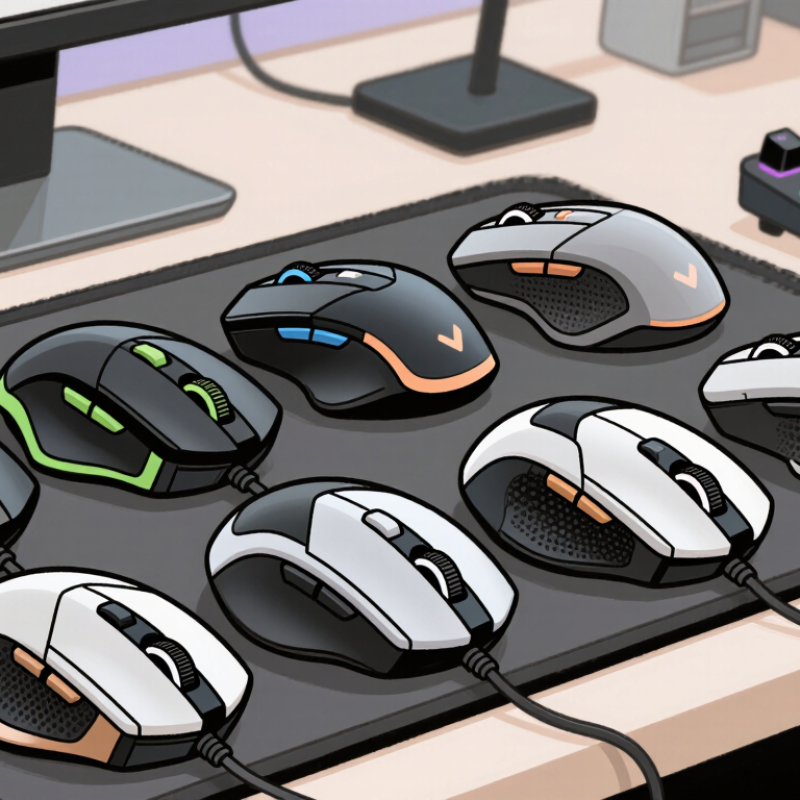
How to Choose the Best Gaming Mouse?

Identify Your Gaming Style and Performance Needs

Your gaming style should shape your mouse choice more than a high specification on its own. In fast-paced shooters, a light mouse and reliable tracking can make quick turns feel easier. Strategy and role-playing games may benefit more from extra side buttons for frequent commands. Neither setup is automatically better. Match the features to the actions you repeat most.

Tips: Note your usual grip, sensitivity, and session length. Test the mouse with the movements you actually use. Small details matter. A sensor’s maximum DPI is not a measure of skill; many players prefer a lower setting for steadier control. Check whether the shape supports your fingers without pressure after a longer session.

Comfort and consistency deserve a close look. If your wrist feels tense, a different shape or lighter weight may help, though posture and desk setup matter too. Specs can be tempting, and it is easy to overvalue them. Try adjusting one setting at a time, then give yourself a few sessions to judge the change. Test before deciding. A mouse that feels unfamiliar on day one may simply need adjustment, but persistent discomfort is worth taking seriously.

Compare Sensor Accuracy, DPI Range, and Tracking

A gaming mouse’s DPI number describes how far the pointer moves for a given hand movement. It does not prove that the sensor is accurate. That distinction matters. A high setting can make a small wrist motion send the cursor across the screen, but it may feel harder to control. Compare the usable DPI range, not just the maximum. Many players settle on a moderate setting and adjust it to their screen size and aiming habits.

Tracking quality shows up during movement. Try slow, precise motions across a plain mouse pad, then make a quick sweep and stop sharply. The pointer should follow smoothly, without skipping or drifting. Keep the surface and settings consistent when comparing devices. A sensor may behave differently on a glossy desk than on a textured pad. Small differences matter. If you notice jitter, check the surface and software settings before blaming the mouse.

DPI steps are useful only when they offer practical control. A range with sensible increments can make adjustments easier, while an enormous advertised range may add little for everyday play. Tracking speed also matters for players who make fast, wide movements; the cursor should not lose contact when the hand moves quickly. It is easy to overrate specifications on a box. Your own repeatable test is more revealing, though it can be imperfect: fatigue, grip, and even a slightly uneven pad can change what you feel.

How to Choose the Best Gaming Mouse? - Compare Sensor Accuracy, DPI Range, and Tracking

Sensor Performance Class Representative CPI (DPI) Range Rated Tracking Speed Rated Acceleration Accuracy and Tracking Considerations Best Suited For
Basic optical 800–6,400 CPI About 60–100 IPS About 20–30 g Usually adequate for ordinary cursor movement and slower play. Check for consistent tracking at the CPI setting you actually use; maximum CPI alone does not indicate accuracy. Casual gaming and users who make slower, controlled movements
Mainstream gaming optical 100–16,000 CPI About 300–400 IPS About 35–40 g Provides ample headroom for fast swipes. Practical accuracy depends on sensor implementation, firmware, surface, and lift-off behavior—not just the advertised CPI range. Most gaming genres, including action games and competitive play
High-performance gaming optical 100–26,000 CPI About 400–650 IPS About 50 g High tracking limits help prevent spin-outs during very fast movement. Look for independent testing of CPI deviation, smoothing, and motion consistency. Competitive players who make rapid or wide mouse movements
Extended-range gaming optical 100–32,000 CPI Up to about 650 IPS Up to about 50 g The extra CPI range is useful mainly for unusually high sensitivity preferences or specialized setups. A higher maximum CPI does not automatically mean more precise tracking. Players who specifically need very high sensitivity or broad sensitivity adjustment

CPI is often marketed as DPI; both describe the reported counts per inch for mouse movement. Figures above are representative rated specifications, not guaranteed results for every mouse in a class. For a practical accuracy comparison, check independent measurements of CPI deviation and tracking consistency at your preferred setting and on your mouse pad.

Choose a Shape, Size, and Weight That Fit Your Hand

A gaming mouse should match the way your hand rests, not just look comfortable on a desk. Notice whether you naturally grip with your palm, fingertips, or a curled claw shape. A broad, high shell may support a relaxed palm grip, while a lower, narrower body can leave more room for fingertip movement. Neither shape is universally better. Your fingers should reach the buttons without stretching, and the mouse should not press sharply into your palm.

Size matters during longer sessions. With your hand on the mouse, check whether your wrist stays fairly straight and your fingers can move freely. If your fingertips hang far over the front, the mouse may be too short; if your palm feels trapped, it may be too large. Weight is just as personal. A lighter mouse can feel quick during repeated flicks, while a heavier one may feel steadier for careful tracking. Try moving it across your usual desk surface. Small differences show up fast.

A first impression can be misleading. Give a new shape a few short sessions, then notice soreness, grip tension, or missed clicks. I would not treat one measurement as decisive; hand proportions and habits vary. Even a comfortable mouse can feel awkward at first.

Evaluate Connectivity, Buttons, and Software Features

How to Choose the Best Gaming Mouse?

Evaluate Connectivity, Buttons, and Software Features

Choose wired USB for a steady connection without battery worries, or 2.4 GHz wireless for a less cluttered desk. Bluetooth is convenient for travel, but may add latency. At 1,000 Hz, a mouse reports its position every millisecond; that polling interval alone does not guarantee lower end-to-end latency. Compare independent lab measurements. Newzoo’s 2024 Global Games Market Report estimated 3.42 billion players worldwide, but the right setup still depends on your game and grip.

Count useful buttons, not advertised ones. In a shooter, two thumb buttons can handle reload and melee without changing your grip. Strategy games may benefit from extra side controls. Test the wheel, too: an awkward click can trigger an unwanted action. Good software lets you adjust sensitivity, remap buttons, and save profiles to onboard memory. Check whether your settings stay active after closing the app.

Tips: Test the mouse on your own desk surface. Keep one profile simple. If a faster setting makes aiming uneven, change it back. Elaborate macros can be tempting, but a few reliable shortcuts are often easier to maintain. Compare measured click latency and tracking in independent reviews, not just maximum polling-rate claims.

Test Comfort and Performance Before You Buy

A gaming mouse may look comfortable, but a few minutes of testing can reveal pressure points. Hold it as you normally play, then check whether your fingers reach every button without stretching. Try your usual grip, whether palm, claw, or fingertip. Comfort is personal. A mouse that feels light in a shop may feel tiring after an hour, so pay attention to wrist tension and how easily you can lift and reposition it.

Test performance with familiar tasks, not only a quick swipe. Track a small target across the screen, make sharp turns, and click repeatedly. The cursor should move predictably, without skips or unwanted acceleration. Try more than one sensitivity setting; a high number does not automatically mean better control. If possible, test on a surface similar to your desk. Store demos can be imperfect, and display settings may differ from your own setup. That matters.

Tips: Check the mouse’s weight and button reach before buying. Ask whether you can try it, and review the return policy in case the shape feels wrong at home. Take short breaks during testing; tired hands can give misleading feedback. Notice what feels awkward, too. Don’t talk yourself out of it.

How to Choose the Best Gaming Mouse? Test Comfort and Performance Before You Buy

How to read this: These illustrative 0–100 scores show how a hands-on comparison might summarize comfort after a 30-minute session and tracking performance during repeated movements. Try each mouse with your own grip and games; fit and feel are personal.