10 Best Wall Mounted Batteries for Home Energy Storage
A wall mounted battery can turn a sunny afternoon into useful power after sunset. It stores electricity from rooftop solar or the grid, then supplies selected circuits when needed. Imagine the practical test: a refrigerator humming, hallway lights on, and a phone charging during an outage. That everyday usefulness matters more than a polished product photo.
Choosing among the 10 best wall mounted batteries for home energy storage takes more than comparing capacity. Check usable kilowatt-hours, continuous output, backup switching, battery chemistry, warranty terms, and operating temperature. A compact unit may fit beside a garage panel, yet provide too little power for a well pump or air conditioner. Installation details matter, too. Confirm compatibility with the inverter and electrical system, and ask a qualified installer to assess the site.
Energy-storage researcher Dr. Imre Gyuk has often emphasized how storage can help renewable electricity remain useful when generation changes. In paraphrase: stored power can bridge the gap between solar production and household demand. It is a useful principle, not a buying guarantee. Real performance depends on system design, weather, usage, and maintenance. Specifications can look reassuring on paper. They do not tell the whole story. A ranking should therefore explain its criteria, distinguish tested facts from manufacturer claims, and admit where evidence is limited. No single battery suits every home. That deserves a closer look.
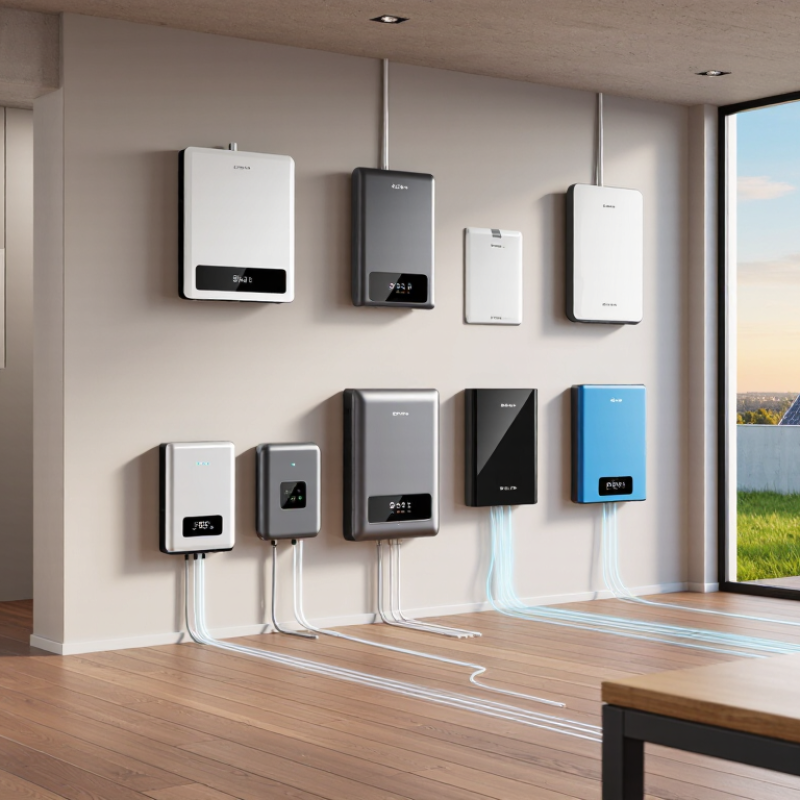
How Wall-Mounted Batteries Store Energy for Home Use
A wall-mounted home battery stores energy in rechargeable cells, usually as direct current. When rooftop solar panels produce more electricity than a home needs, a compatible inverter directs the surplus to the battery. Later, the system converts stored power into alternating current for household circuits. Simple in principle.
A battery management system monitors temperature, voltage, and charge levels to help protect the cells. During an outage, backup power is available only if the system is configured to isolate selected circuits. A battery’s capacity, measured in kilowatt-hours, tells you how much energy it can store; its power rating, measured in kilowatts, indicates how quickly it can deliver that energy. They are not interchangeable.
The International Energy Agency’s 2024 Batteries and Secure Energy Transitions report records 42 gigawatts of battery-storage capacity added worldwide in 2023. That figure covers many applications, not just homes, but it shows how quickly storage is expanding. For a household, actual runtime depends on appliance loads, inverter limits, and usable battery capacity. A practical sizing check starts with essential circuits, not the whole-house total. Winter production and evening demand can complicate the estimate. Real homes are messier. A sunny-day bill alone is a weak guide.
10 Best Wall Mounted Batteries for Home Energy Storage - How Wall-Mounted Batteries Store Energy for Home Use
The table compares illustrative wall-mounted home battery capacity options, not specific products. Figures are typical planning ranges; actual usable capacity, power, efficiency, and cycle life depend on the battery and inverter system, operating conditions, and manufacturer specifications.
Key Features to Compare in Residential Battery Systems
A wall-mounted battery should fit the home’s daily use, not just look impressive on a specification sheet. Compare usable capacity in kilowatt-hours with continuous power output in kilowatts. Capacity indicates how long energy may last; output affects which appliances can run together. A refrigerator, lights, and internet equipment draw modest power, while a pump or heating system can demand much more. Check surge ratings too, since motors often need extra power when starting. Small detail. Big difference.
Efficiency, warranty terms, and installation needs deserve equal attention. Round-trip efficiency shows how much stored energy remains available after charging and discharging, though real results vary with temperature and operating conditions. Read warranty limits for years, energy throughput, and retained capacity; the headline term alone can be misleading. Battery dimensions and weight matter on a garage wall, especially near doors, shelving, or narrow walkways. Confirm required clearances and suitable temperature ranges with a qualified installer. Capacity figures are not always directly comparable, because specifications may use different definitions.
For backup, ask whether the system can supply selected circuits during an outage, and whether it needs a compatible inverter or separate control equipment. A high-capacity unit may still provide limited power to several heavy loads at once. Check monitoring features and whether the system can be expanded later. That option sounds useful, but added batteries may require extra space, wiring, and compatible equipment. Compare the full installed configuration, not only the battery enclosure.
10 Best Wall-Mounted Batteries for Home Energy Storage
10 Best Wall-Mounted Batteries for Home Energy Storage
Choosing among the 10 best wall-mounted batteries starts with the home’s actual loads, not the largest capacity on a spec sheet. Check usable kilowatt-hours, continuous output, surge capacity, and whether the system can operate during an outage. A refrigerator, modem, and a few lights need less power than a well pump or electric cooking. Details matter. Confirm the battery works with the existing inverter, and ask an installer to assess wall strength, clearances, and operating temperatures. A neat installation is not automatically a good fit.
The International Energy Agency’s Batteries and Secure Energy Transitions report states that battery storage additions in the power sector reached about 42 gigawatts in 2023, more than in all previous years combined. That figure reflects the broader market, not residential sales, but it shows how quickly storage is expanding. For a home comparison, review round-trip efficiency, warranty terms, usable capacity, and the conditions that limit warranty coverage. Also compare documented safety testing and service availability. One caveat: estimated backup time can look precise, yet real household demand changes by the hour. It is easy to overbuy. A smaller battery may cover essential circuits well, while a larger one may still fall short during prolonged outages.
10 Best Wall-Mounted Batteries for Home Energy Storage
Comparison of usable energy capacity (kWh) across ten representative residential battery systems. Products are anonymized; capacity depends on model and configuration. This chart compares capacity only, not overall performance or suitability.
Higher capacity can provide more stored energy, but actual backup duration depends on household demand, battery power output, and system settings.
Installation and Compatibility with Home Energy Systems
A wall-mounted battery should fit the home’s electrical system, not just an empty patch of wall. Before choosing one, check its continuous output, usable capacity, and operating voltage against the inverter and household loads. Some systems connect on the direct-current side; others use alternating-current coupling. They are not automatically interchangeable. Confirm compatibility in the equipment manuals or with a qualified installer. Measure twice.
Installation begins with the wall itself. A battery can be heavy, so the mounting surface and anchors must support its full operating weight. Keep the unit within the manufacturer’s clearance and temperature limits, away from damp areas and direct heat. Leave space for service access and cable bends. That matters. A cramped installation can make inspection and maintenance harder later.
The electrical plan should account for the main panel, backup circuits, and any existing solar equipment. Ask how the system will isolate backup loads during an outage, and whether monitoring requires a reliable internet connection. An installer should verify wiring, protection devices, and local requirements before commissioning. Compatibility can look clear on a product sheet, yet small differences in firmware, voltage range, or communication protocols may still cause problems. I would not assume a battery will work with an older inverter without written confirmation.
Safety, Maintenance, and Battery Lifespan
A wall-mounted battery saves floor space, but safe placement still matters. Mount it on a structurally sound surface, using the supports specified for its weight. Before installation, a qualified electrician should check the wiring, protective devices, and required clearances. Have the wall checked, too. Keep the unit away from direct heat, standing water, and clutter that blocks airflow. A garage corner can look convenient, yet become too hot in summer.
Check the battery’s display or monitoring app regularly for unusual warnings, temperature changes, or a sudden drop in output. Keep the casing and nearby vents free of dust with a dry cloth; never open the enclosure or spray it with cleaner. If you notice swelling, a burning smell, or repeated alarms, stop using the system if safe and contact a qualified service professional. Don’t wait for the next routine check. A small warning may be easy to dismiss.
Battery lifespan depends on cell chemistry, operating temperature, charge settings, and how often the battery cycles. Frequent deep discharges and sustained heat can accelerate wear, though exact effects vary by system. Follow the manual’s charge limits and keep records of capacity or performance readings. A gradual decline is normal; a sharp change deserves attention. It is tempting to treat the advertised lifespan as a promise, but real household use is less tidy than a test sheet.