
Contact Us: 416.615.1555 | sale@booksvendingmachine.com
Plastic Pouch Bags can look simple on a sample table: a printed film, a zipper, and a clean seal. Yet small differences in barrier layers, material thickness, and sealing consistency can affect shelf life and production performance. Choosing a supplier in China therefore takes more than comparing unit prices. It means checking samples, specifications, quality controls, and communication before placing a large order.
The market is substantial. Grand View Research estimated the global flexible packaging market at USD 267.9 billion in 2023 and projected a 4.5% compound annual growth rate from 2024 to 2030. This figure covers flexible packaging broadly, not pouch bags alone, but it shows why supplier capability matters. Packaging author Walter Soroka describes packaging as “the science, art, and technology of enclosing or protecting products for distribution, storage, sale, and use.” That definition is a useful reminder: a pouch must protect the product and work reliably in real handling conditions.
Ask suppliers for material structures, available pouch formats, test details, and production lead times. Request production samples, not just polished sales samples. Check zipper alignment, seal edges, print registration, and how the pouch feels when filled. Then confirm how changes are documented. A factory may look capable on paper. Real performance still needs checking. Price matters, of course, but it can hide trade-offs; even a careful buyer can miss one. This guide explains how to assess Chinese suppliers with practical checks, credible evidence, and a little healthy skepticism.
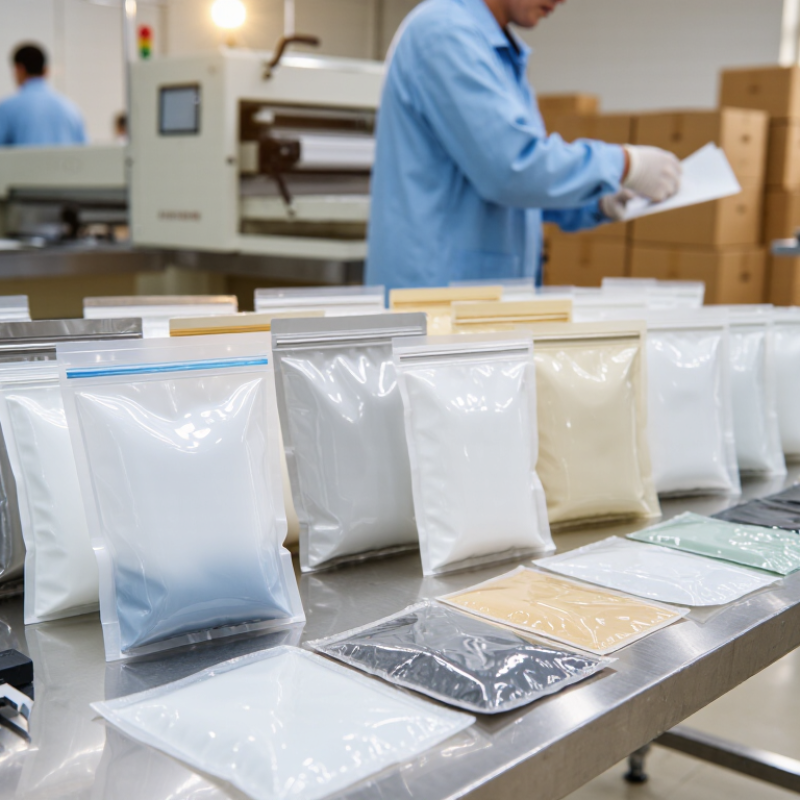
Before contacting a supplier, define the pouch’s job. Record the product, fill weight, target dimensions, opening style, and expected shelf life. A dry snack may need a moisture barrier, while a liquid needs dependable seals and leak testing. Specify material structure, thickness, finish, print colors, and any zipper or spout. The Flexible Packaging Association’s 2023 State of the U.S. Flexible Packaging Industry report valued U.S. sales at $42.9 billion in 2022. That scale makes clear how varied pouch applications can be; a supplier’s general “food-grade” claim is not a complete specification. Ask for relevant test results, production tolerances, minimum order quantities, lead times, and documentation for the material being quoted. A first draft of the spec will probably miss something.
Tips: Send a sample pouch or a dimensioned drawing. Ask suppliers to quote the same material structure and pouch size, then compare like for like. Request samples from a production run when possible, not only a polished showroom sample. Check seal strength and fit with your actual product. Small differences matter.
Set selection criteria before reviewing prices. Score each supplier on technical capability, quality controls, communication, and delivery consistency. Confirm how defects are handled and whether production changes require approval. Ask for a written specification and sample sign-off before ordering. Leave room for one revision; early estimates are rarely perfect. A low unit price may not reflect setup costs, rejected pouches, or delayed delivery.

How to Find the Best Plastic Pouch Bags Supplier in China?
Research Chinese Suppliers and Verify Their Business Credentials
Start with a shortlist of suppliers whose pouch formats match your needs. Compare material structure, thickness, printing options, and minimum order quantities. A polished catalog is reassuring, but it proves little. Ask for the supplier’s registered Chinese business name and Unified Social Credit Code. Check them against China’s National Enterprise Credit Information Publicity System, then confirm that the registered scope and address fit the company’s claims.
Request current certifications and verify them with the issuing organization. Check that each certificate covers the actual factory and product category, not just a trading office. Ask for recent production records, quality-control procedures, and a sample made to your specifications. For a stand-up pouch, inspect the seals, zipper, print alignment, and laminate layers. The OECD’s Global Plastics Outlook (2022) estimates that packaging generated 40% of global plastic waste in 2019. That makes material composition and end-of-life claims worth checking, not simply accepting from a brochure.
Tips: Compare the sample with the written specification, and request a live video walkthrough of the production floor. If an address, certificate, or company name differs across documents, pause and ask for clarification. Small inconsistencies matter.
Research Chinese Suppliers and Verify Their Business Credentials
This suggested 100-point framework helps organize supplier due diligence. The weights are recommendations, not measured industry statistics. Verify business credentials and supporting documents independently before making a decision.
When comparing Chinese plastic pouch suppliers, judge the finished package, not a polished catalog. The Flexible Packaging Association’s 2023 State of the U.S. Flexible Packaging Industry report recorded $42.9 billion in U.S. sales for 2022. That scale signals competition, not proof of quality. Request samples from a production run and check seal strength, thickness consistency, print alignment, and odor. Samples can mislead.
Match the material structure to the product and shipping conditions. A PET/PE laminate may suit some uses, while moisture- or oxygen-sensitive contents may need stronger barrier performance. Ask for relevant test reports, including barrier and seal results, and confirm the stated test method. Specify pouch dimensions, zipper or gusset details, artwork tolerances, minimum order quantity, and lead time in writing. A small mismatch can create costly rework.
Tips: Request current ISO 9001 or relevant packaging-safety certificates, then verify their scope and expiry with the issuing body. For food-contact packaging, ask for test documentation suited to your destination market; a certificate alone is not proof of suitability. Compare quotes using the same material structure and specifications. It is tempting to choose the lowest price. I would pause and check what was left out.
| Assessment Dimension | What to Check | Evidence to Request | Practical Evaluation Criteria | Score (1–5) |
|---|---|---|---|---|
| Product quality and consistency | Inspect pouch dimensions, thickness, print registration, surface finish, seals, and lot-to-lot consistency. Confirm that samples match the written specification. | Production samples, product specification sheet, inspection records, and reports from relevant seal-strength or leak-testing methods. | Strong performance means documented specifications, repeatable results, and clear procedures for handling defects. Agree on acceptance limits before placing an order. | ____ / 5 |
| Material structure | Confirm every layer and its purpose. Common structures include PET/PE for printable, heat-sealable pouches; PET/aluminum foil/PE for stronger light and moisture barriers; and mono-PE structures designed to support certain recycling pathways. | Layer-by-layer structure, material and thickness details, barrier data where relevant, and a declaration identifying food-contact materials if applicable. | Choose materials according to product sensitivity, filling process, storage conditions, and local packaging requirements. A “recyclable” claim depends on the full package and available collection systems. | ____ / 5 |
| Barrier and shelf-life suitability | Check whether the pouch’s oxygen, moisture, light, and aroma barrier properties suit the product and intended shelf life. | Test data for the proposed structure, including oxygen transmission rate or water vapor transmission rate where relevant, with test conditions stated. | Compare data only when the material structure, thickness, test method, temperature, and humidity conditions are comparable. Request product-specific validation when shelf life is critical. | ____ / 5 |
| Customization and fit | Confirm pouch style, dimensions, zipper or spout options, tear notch, hang hole, window, printing, and compatibility with the filling and sealing equipment. | Dimensioned drawings, artwork proof, print color approval process, sample approval terms, and written details of tooling charges and minimum order quantity. | Check that the supplier can document the final design and reproduce approved samples. Minimum quantities, lead times, and available features vary by supplier and should be confirmed in the quotation. | ____ / 5 |
| Food-contact compliance | For food packaging, verify that the specific materials and intended conditions of use meet the rules in the destination market. | Applicable declarations of compliance, material composition information, and migration-test reports for the relevant structure and use conditions. | Requirements are market-specific. For example, EU food-contact plastics are subject to Regulation (EU) No 10/2011 and the framework requirements of Regulation (EC) No 1935/2004. Confirm current requirements with a qualified compliance specialist. | ____ / 5 |
| Management-system certifications | Check whether the supplier holds relevant, current certifications and whether their scope covers the actual production site and packaging activity. | Certificate copies, certificate numbers, scope, issuing or accreditation details, validity dates, and the production-site address. | ISO 9001 relates to a quality management system; it is not, by itself, proof that a pouch complies with food-contact laws. Verify certificates with the issuing body where possible. | ____ / 5 |
| Production controls and traceability | Ask how the supplier controls incoming materials, printing, lamination, curing, pouch conversion, inspection, and batch identification. | Process overview, quality-control checkpoints, lot-traceability example, and procedures for complaints and corrective actions. | A reliable process should link finished goods to production lots and provide a documented way to investigate defects and implement corrective actions. | ____ / 5 |
| Sampling, testing, and pre-shipment inspection | Agree on sample approval, inspection timing, sampling method, defect categories, and the tests appropriate to the pouch’s intended use. | Approved reference sample, inspection plan, test reports, and a written pre-shipment acceptance agreement. | Set measurable acceptance criteria before production. Where needed, use an independent inspection service and ensure test methods match the product and application. | ____ / 5 |
| Commercial and delivery reliability | Compare quotation details, production lead time, packaging for shipment, payment terms, communication, and handling of delays or nonconforming goods. | Itemized quotation, agreed production schedule, order terms, shipping details, and written quality or replacement terms. | Compare suppliers on the same pouch specification and delivery terms. Confirm all costs, timelines, and responsibilities in writing rather than relying on verbal estimates. | ____ / 5 |
Scoring guide: 1 = insufficient evidence or major gaps; 3 = acceptable but requires follow-up; 5 = well-documented and verified. Treat this as a comparison framework, not a substitute for product testing or regulatory advice.
How to Find the Best Plastic Pouch Bags Supplier in China?
Compare Pricing, Minimum Orders, Lead Times, and Shipping Options
A low unit price is useful only when the specifications match. Ask each supplier to quote the same pouch size, material structure, thickness, closure, and print coverage. For example, a stand-up pouch with a zipper may cost more than a flat pouch. Request setup, sampling, and packing charges separately. Small fees add up.
Check the minimum order quantity against your actual demand and storage space. A large order may lower the unit cost, but it can tie up cash and leave you with unused stock. Ask for a written production timeline, including sample approval and printing. Add a buffer for revisions. Plans change.
Tips: Confirm whether quoted lead times start after deposit or final artwork approval. Ask how the goods will be packed, which shipping methods are available, and what the freight estimate covers. Compare delivery terms and destination costs, not just factory prices. Request a sample before approving a full run. One detail is easy to miss: sample quality does not always prove every production pouch will be identical, so agree on tolerances and inspection steps in writing.
A product sample reveals details that a quotation cannot. Request several pouch sizes, materials, and seal options before discussing a large order. Check the pouch thickness with a gauge, inspect the seal edges, and test whether the zipper closes smoothly. Ask the supplier to label each sample with its material and production date. Clear records make comparisons easier.
Use the samples under conditions similar to your actual packing process. Fill one with your product, seal it, and check for leaks or weak corners after handling. Compare print alignment and color consistency across multiple pieces. Small details matter. Still, a neat sample does not prove that every production batch will match it. That uncertainty deserves attention.
Before paying a deposit, ask how the supplier checks quality during production and what happens when defects appear. Request recent inspection records or a live video of the production area, if available. Notice how promptly and specifically the team answers practical questions about lead times, minimum quantities, and sample revisions. Keep the agreed specifications in writing, including dimensions, material structure, and tolerances. Samples help, but careful follow-up is what turns a promising conversation into a more reliable order.