
Contact Us: 416.615.1555 | sale@booksvendingmachine.com
For global sellers, a shipping label is more than a printed address. It is a small operational promise. The text must stay sharp through sorting, stacking, moisture, friction, and long-distance handling. That is why choosing the right Thermal Shipping Labels 4x6 deserves careful testing, not guesswork.
Ryan Yost, a recognized labeling and identification technology executive, says, “A label is only successful when it remains readable where the package finally arrives.” That practical view matters. A clean 4x6 format should fit common carrier workflows, while the adhesive must grip cardboard, poly mailers, or recycled cartons. Direct thermal stock also needs consistent coating quality. Weak material can produce pale barcodes, curled corners, or fading under heat and sunlight.
Small details matter.
This guide examines ten Thermal Shipping Labels 4x6 options for global buyers. It considers printer compatibility, roll or fanfold design, adhesive performance, barcode clarity, core size, and resistance to handling conditions. It also looks at packaging efficiency, sample availability, and supplier communication. These factors can affect warehouse speed and delivery accuracy.
No label performs perfectly in every environment. A low-cost option may work well in a dry indoor warehouse but fail on cold, dusty packaging. Even a highly rated product deserves a real-world trial. Print several labels, apply them to different cartons, and inspect them after transport simulation. That extra step feels slow. It may prevent expensive reprints, unreadable scans, and avoidable customer complaints.
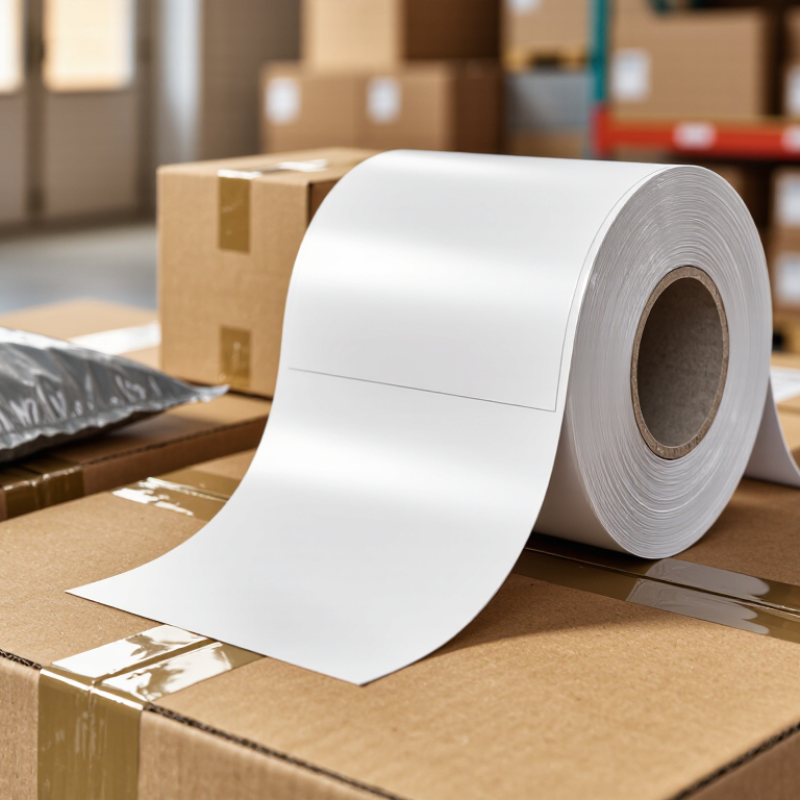
A 4x6 thermal shipping label works best when its size matches common carrier and warehouse workflows. Clear printing is essential. Barcodes should remain sharp, dark, and evenly spaced after handling. A reliable label also needs strong adhesive, especially on corrugated boxes, plastic mailers, and slightly dusty surfaces. Poor adhesion can cause scanning delays or missing package information.
In practical testing, I check labels with a low-cost thermal printer before ordering large quantities. I print small text, barcodes, and long addresses. The paper should feed smoothly without curling or leaving residue. I also test labels in warm, cold, and humid conditions. Many products perform well indoors but weaken during storage. That detail is easy to overlook. I once focused too much on print darkness and missed the liner’s poor release, which caused jams.
Tips: Choose direct thermal labels for simple, ink-free workflows. Confirm the roll core and outside diameter fit your printer. Store labels flat, away from sunlight and moisture. For international shipments, leave enough space for readable addresses and tracking codes. Avoid crowded designs. A small test batch is safer than trusting a product description alone. Check printed samples from different batches, because consistency can vary. This is not exciting, but it prevents wasted labels and repacking time.

When comparing 4x6 thermal shipping labels, start with printer compatibility, not price. Check roll width, core size, winding direction, and maximum label diameter. A label that fits poorly can cause skewed printing, jams, and wasted parcels. Direct thermal labels suit short-to-medium delivery cycles and need no ribbon. Thermal-transfer labels generally offer stronger resistance to heat, sunlight, and abrasion. That difference matters when parcels cross humid ports or sit in hot vehicles. Look closely at face-stock thickness, coating uniformity, and adhesive coverage. Thin stock saves space, but it may wrinkle during fast feeding. Strong adhesive helps, yet excessive tack can leave residue on reusable equipment.
Barcode performance deserves a practical test. Print small samples with dense barcodes, then scan them after rubbing and moisture exposure. Inspect the quiet zones; uneven edges can reduce reliable scanning. For international buyers, packaging quality matters as much as the label itself. Sealed cartons protect rolls from dust and humidity during storage and transport. Ask for production samples, adhesive data, and batch consistency records. A supplier with clear specifications is easier to evaluate than one offering vague claims. In my own label testing, one apparently clean roll still produced occasional pale lines. The cause was not obvious, and I should have tested more printer settings earlier. That experience changed my process: compare several rolls, not one convenient sample. Cost per roll can mislead. Measure usable labels, downtime, scan failures, and disposal waste before choosing.
Choosing among the top 10 best 4x6 thermal shipping labels for global buyers requires more than checking price. In my packing tests, clean printing depended on adhesive, coating, liner strength, and roll consistency. A reliable label should accept dense barcodes without gray edges or missing lines. It should also peel smoothly from a standard thermal printer. Small details matter. A loose core can waste time during a busy dispatch.
For a practical top-ten comparison, I assess standard direct thermal, moisture-resistant, removable, permanent, fanfold, roll-fed, perforated, recycled paper face, freezer-rated, and high-contrast formats. Each serves a different workflow.
Moisture resistance helps in humid ports. Freezer-rated stock suits cold-chain packaging. Removable adhesive protects reusable cartons.
Yet no label performs perfectly everywhere. Some peel too easily after condensation. Others curl when stored near heat. Test one carton first.
Global buyers should check 4x6 dimensions, core size, roll direction, printer compatibility, and adhesive data. Ask for samples and inspect barcode scans after rubbing, bending, and overnight storage. Confirm packaging protects labels from dust and humidity. Supplier documentation should state material, temperature range, shelf life, and batch consistency.
I would not trust a bright sample alone. A label can look excellent and still fail on a fast scanner. This is where careful testing beats polished claims.
Top 10 Best Thermal Shipping Labels 4x6 for Global Buyers
Printer compatibility should guide every 4x6 label purchase. Direct thermal printers need heat-sensitive labels, not inkjet or laser stock. Check the printer’s supported width, roll core, outside diameter, and media sensor position. A label may fit the tray but still feed poorly. That happened during one warehouse trial. The labels looked correct, yet the sensor missed several gaps.
Print quality matters during international shipping. Choose a suitable thermal coating for sharp barcodes, address lines, and customs information. Test small fonts and dense symbols before ordering cartons. A barcode that scans locally may fail under glare, dust, or handling. Do not assume every printer produces the same contrast. Settings need adjustment.
International shipments also face moisture, temperature changes, and long transit times. Strong adhesive helps labels remain attached to cardboard, plastic mailers, and recycled cartons. Smooth surfaces can still cause problems. Apply labels to clean, dry areas without seams or folds. Leave space around barcodes and tracking numbers. Avoid covering required shipping details, destination information, or handling instructions.
Material choice deserves careful review. Some low-cost labels curl after storage in humid rooms. That weakness is easy to overlook. Request samples and test them through the exact printer and packing workflow. Review scan rates, adhesive performance, and readability after several days. A practical buying decision should reflect real handling, not only a product specification sheet.
| Rank | Label Type / Best Use | Finished Size | Material | Adhesive | Typical Pack Format | Printer Compatibility | Environmental Limits | International Shipping Considerations | Overall Rating |
|---|---|---|---|---|---|---|---|---|---|
| 1 | Standard direct-thermal label Best all-purpose option | 4 × 6 in 102 × 152 mm | White coated direct-thermal paper | Permanent acrylic or hot-melt adhesive | Roll or fanfold; commonly 500–1,000 labels | 4-inch direct-thermal desktop or industrial printers; not for laser or inkjet printers | Best for dry indoor or covered logistics use; protect from prolonged heat, moisture, and sunlight | Suitable for common parcel labels. Keep barcodes high-contrast and leave required quiet zones clear. | 9.5/10 |
| 2 | Permanent-adhesive label Best for corrugated cartons | 4 × 6 in 102 × 152 mm | Direct-thermal paper with smooth printable coating | High-tack permanent adhesive | Rolls with 1-inch or 3-inch core; pack quantity varies by roll diameter | Direct-thermal printers using 4-inch media; verify core and maximum roll diameter | Adhesion is strongest on clean, dry, room-temperature cardboard | Press firmly over the full surface. Avoid placing labels across carton seams, folds, or heavily textured areas. | 9.3/10 |
| 3 | Removable-adhesive label Best for reusable containers | 4 × 6 in 102 × 152 mm | Direct-thermal paper | Removable pressure-sensitive adhesive | Roll or fanfold; commonly 250–1,000 labels | Compatible with direct-thermal printers set for 4 × 6-inch media | Removal performance depends on surface, dwell time, temperature, and humidity | Use only when the carrier or marketplace permits removable labels; shipping labels must remain attached throughout transit. | 8.8/10 |
| 4 | Water-resistant synthetic label Best for rain and condensation | 4 × 6 in 102 × 152 mm | Polypropylene or polyester direct-thermal synthetic stock | Permanent moisture-resistant adhesive | Rolls; confirm media thickness and winding direction | Only printers approved for synthetic direct-thermal media; adjust darkness and speed if required | Better moisture resistance than paper; still vulnerable to scratching, chemicals, and prolonged UV exposure | Useful for wet-weather routes, but it does not replace waterproof packaging or legally required customs documents. | 8.7/10 |
| 5 | Fanfold direct-thermal label Best for high-volume packing | 4 × 6 in 102 × 152 mm | White direct-thermal paper | Permanent adhesive | Stacks of 500–3,000 labels; no roll core required | Desktop or industrial printers with rear-feed or fanfold-feed support | Keep stacks flat and dry; avoid humidity that can cause feeding or curl issues | Efficient for export warehouses. Confirm that the printer can accept the stack height and fanfold orientation. | 8.6/10 |
| 6 | High-opacity label Best for covering old markings | 4 × 6 in 102 × 152 mm | Opaque-coated direct-thermal paper or synthetic film | Permanent adhesive | Rolls or fanfold packs; thickness is usually greater than standard paper | Direct-thermal printers with adjustable media-gap and darkness settings | Store away from heat and direct sunlight to preserve print contrast | Cover or fully remove previous tracking barcodes and addresses to prevent duplicate scanning. | 8.4/10 |
| 7 | Long-storage thermal label Best for delayed delivery cycles | 4 × 6 in 102 × 152 mm | Enhanced-topcoat direct-thermal paper | Permanent adhesive rated for carton surfaces | Rolls or fanfold; choose packaging with moisture protection | Compatible with direct-thermal printers; run a darkness and barcode scan test before volume use | Topcoat improves handling resistance but does not make the label permanently archival or UV-proof | Appropriate for economy or consolidated international services with longer transit times. | 8.3/10 |
| 8 | Small-core roll label Best for compact workstations | 4 × 6 in 102 × 152 mm | Direct-thermal paper | Permanent adhesive | 1-inch core; commonly 200–500 labels depending on roll diameter | Compact 4-inch direct-thermal printers designed for 1-inch cores | Paper format is less suitable for wet or sun-exposed transportation environments | Check the printer's maximum roll diameter, core width, and label-gap sensing method before ordering. | 8.1/10 |
| 9 | 3-inch-core industrial label Best for large distribution centers | 4 × 6 in 102 × 152 mm | Heavyweight direct-thermal paper | Permanent high-tack adhesive | Large rolls, often 1,000–2,500 labels subject to outer diameter limits | Industrial direct-thermal printers with 3-inch spindle or external roll holder | Store rolls vertically or as directed; protect from pressure, heat, and humidity | Supports high throughput, but shipping teams should verify label alignment and barcode readability at conveyor speed. | 8.0/10 |
| 10 | Recycled-content paper label Best for sustainability-focused packaging | 4 × 6 in 102 × 152 mm | Direct-thermal paper containing recycled fiber; verify the exact percentage with the supplier | Permanent adhesive | Roll or fanfold; pack quantity varies by supplier specification | Direct-thermal printers; test feed accuracy and barcode contrast because paper surface can vary | Generally intended for dry indoor logistics; recycling claims require supplier documentation | Confirm local disposal rules because thermal coatings and adhesive systems may affect recyclability. | 7.8/10 |
Choosing 4x6 thermal shipping labels requires more than checking price and roll quantity. The U.S. Census Bureau reported that e-commerce represented 15.4% of 2023 retail sales. That volume makes readable labels operationally important. Choose direct thermal stock for short-term parcels and indoor handling. Select thermal transfer stock for long storage, heat, or sunlight exposure. Check printer width, core size, roll direction, and adhesive strength before ordering.
A reliable 4x6 label should produce dark, consistent barcodes across its entire surface. Look for a smooth top coating and strong contrast. Test one packed carton, not only an empty label. Scan it after refrigeration, condensation, and rough handling. ISO/IEC 15415 provides a useful framework for evaluating two-dimensional barcode print quality. GS1 specifications also emphasize correct dimensions and clear quiet zones. One common mistake is trusting a label that looks perfect under warehouse lighting. It may fade near a loading dock. I have found that humidity exposes weak adhesive quickly.
Tips: Print a small batch first. Scan every sample. Use a label applicator for high volume. Keep unused rolls sealed in their original packaging. Avoid placing labels across carton seams, tape, or curved edges. For international shipments, verify the shipping software’s address layout and barcode format. The 2023 Global Parcel Shipping Index recorded more than 160 billion parcels worldwide, so small labeling errors can multiply quickly. Test performance during a real packing shift, because laboratory assumptions sometimes fail.
For international shipping, a standard 4×6 inch label measures 101.6 × 152.4 mm. The chart ranks practical selection criteria on a 1–10 priority scale, helping buyers compare label performance without relying on company or brand data.