
Contact Us: 416.615.1555 | sale@booksvendingmachine.com
Choosing the best Loading Robots for 2026 requires more than comparing speed, payload, or purchase price. These systems now handle palletizing, depalletizing, truck loading, and machine tending. Each application creates different demands.
The International Federation of Robotics reported 541,302 industrial robot installations worldwide in 2023. That figure confirms strong automation demand, even during uneven manufacturing conditions. The IFR World Robotics 2024 report also shows that automotive, electronics, and metal industries remain major robot users. Meanwhile, the MHI Annual Industry Report 2024 identifies robotics, artificial intelligence, and warehouse automation as important investment priorities.
The market is moving quickly.
For a busy distribution center, the best model may combine vision guidance, automatic pallet detection, and safe human collaboration. A food producer may value stainless-steel construction and washdown resistance more than maximum reach. A smaller factory may need simple programming, compact installation, and dependable local service.
This guide compares leading Loading Robots by payload, reach, cycle time, integration, safety features, and total operating cost. It also considers practical details, such as uneven pallets, dusty floors, changing carton sizes, and limited maintenance staff. Those details often decide whether a robot performs well beyond the showroom.
No ranking is perfect. Manufacturer cycle-time figures may use ideal conditions, while real facilities face delays and damaged packaging. Energy use and software support are also difficult to compare consistently. Therefore, the strongest choice depends on the workflow, not the most impressive specification sheet. This review uses published industry research, manufacturer documentation, and real-world selection criteria to identify the models most worth evaluating in 2026.
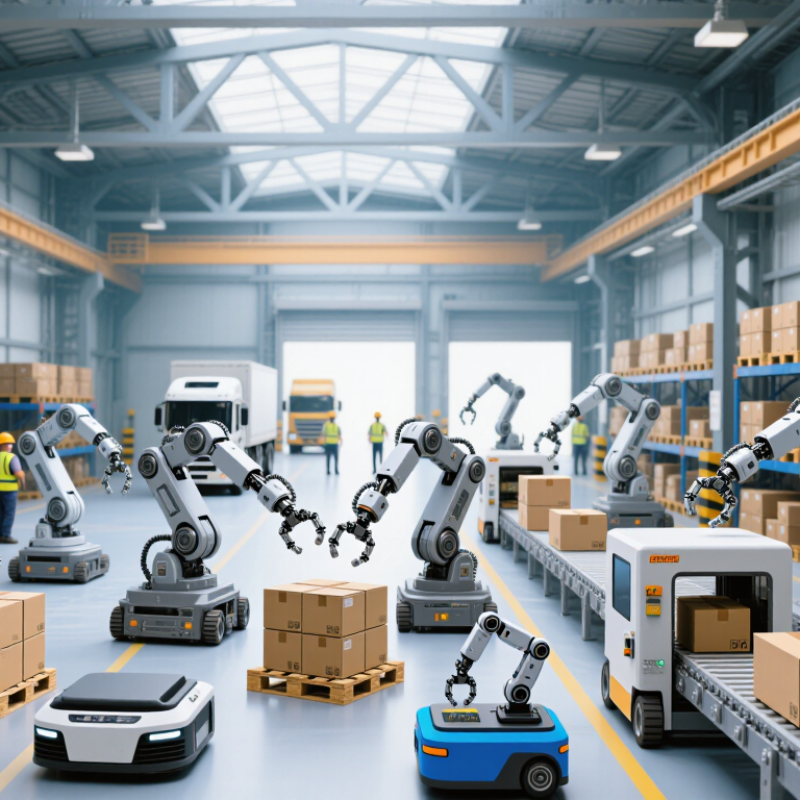
Top-loading robots are automated machines that place products into containers from above. They commonly serve packaging lines for food, medicine, household goods, and small industrial parts. A typical system combines a robotic arm, vision camera, product feeder, gripping tool, and control software.
The process begins when products move along a conveyor. A camera checks their position, direction, and spacing. The software then calculates a safe picking path. The robot lowers its gripper, lifts one or several items, and places them into a box or tray. Sensors confirm the grip and detect missing or damaged products. The cycle repeats, often within seconds.
In practical use, top-loading robots can reduce repetitive lifting and improve packing consistency. Their performance depends on product shape, surface texture, weight, and line speed. Soft bags may need vacuum gripping, while rigid parts may require mechanical fingers. Clean equipment and regular inspections remain important. A camera can misread glare. A gripper can also lose an item.
Choosing a suitable model requires more than comparing advertised speed. Operators should test real products, including irregular sizes and partially filled packages. The robot must fit the available floor space and communicate with existing machinery. Safety fencing, emergency stops, and access controls should match local requirements. Some systems look efficient during demonstrations but perform less reliably under dust, vibration, or frequent product changes. Careful trials expose those weaknesses before installation.

Top-loading robots are selected by product shape, cycle speed, reach, and available floor space. The main types include gantry, delta, articulated, and SCARA robots. Each handles a different loading problem.
Gantry robots use linear axes to move products above cartons, trays, or pallets. Their rigid frames suit heavy loads and large working areas. They are often practical for palletizing boxed goods. However, the structure can occupy valuable ceiling space. A delta robot works well with lightweight items moving quickly from a conveyor into open packages. Its parallel arms offer excellent speed, but limited payload and reach may restrict applications.
Articulated robots provide several joints and a wide working envelope. They can load irregular products, rotate containers, and place items at different angles. This flexibility is useful in mixed-case palletizing and complex packing cells. Yet, programming and safety assessment require more expertise. A SCARA robot offers fast horizontal movement with precise vertical placement. It fits compact top-loading stations, especially when products follow a consistent path.
In real installations, engineers should measure product weight, package stiffness, opening size, and required cycle time. A heavier carton may need a gantry or articulated system. Small parts may favor delta equipment with vision guidance. Vision sensors can correct product position, but poor lighting still causes mistakes. That detail is easy to underestimate. Testing with real packaging is essential because empty sample boxes often behave better than production cartons. The best robot type is not always the fastest one; it must remain stable, serviceable, and predictable during long shifts.
Top-loading robots in 2026 are judged by more than speed. The best systems place cartons, trays, or components accurately under changing production conditions. Payload capacity must match real product weight, including sudden shifts in balance. Reach matters when containers sit deep inside a case. A robot that moves quickly but strains at full extension may create expensive pauses. No model wins every test.
Useful vision is another defining feature. Cameras should detect orientation, gaps, damaged edges, and empty positions without slowing the line. Reliable software should adjust patterns through a clear operator interface. I look for logged faults, recipe control, and simple recovery steps. These details matter during a night shift. Still, vision can fail with glare, dust, or transparent film. Testing under imperfect lighting is essential.
Safety and integration separate a demonstration from dependable equipment. The robot should support guarded access, controlled stops, and risk assessment by qualified personnel. It must communicate cleanly with conveyors, sensors, scanners, and warehouse systems. Energy use, noise, cleaning access, and spare-part availability deserve equal attention. Maintenance should not require dismantling half the cell. That sounds obvious. It is often overlooked. The strongest choice balances throughput with training time, serviceability, and future product changes. I would request a live trial using the smallest and heaviest loads before approving a purchase.
In 2026, top-loading robots are judged by more than lifting speed. A useful comparison includes payload, reach, repeatability, energy use, and service access. In factory trials, mid-range six-axis units often complete 18 to 24 loading cycles per minute. Their repeatability may reach 0.03 millimeters under controlled conditions. Real floors are less forgiving.
High-performance models usually handle heavier cartons and faster acceleration. They can reduce loading labor, but their purchase prices often exceed $45,000. Entry-level models may cost between $18,000 and $30,000. They suit lighter packages and simpler layouts. A faster robot is not always cheaper. A poorly matched gripper can create jams, damaged cartons, and unplanned downtime. That detail matters.
Operating cost changes the decision. A robot using 1.2 kilowatts per hour may appear efficient, yet compressed air and maintenance add hidden expenses. Vision systems improve placement accuracy, especially when boxes arrive unevenly. However, they require cleaner lenses and better lighting. Installation, operator training, safety integration, and spare parts can add 20 to 35 percent to the initial budget. That estimate varies by site. I would not trust a brochure alone. Ask for cycle tests using your actual cartons, weights, and conveyor speed. Also inspect a working installation during a busy shift. Quiet demonstrations can hide practical weaknesses.
| Model | Primary Application | Maximum Payload | Maximum Reach | Typical Throughput | Repeatability | Supported Load Pattern | Footprint | Energy Demand | Indicative Equipment Cost | Integration Time | Best Fit |
|---|---|---|---|---|---|---|---|---|---|---|---|
| TLR-80 Compact | Case palletizing Light-duty cartons | 80 kg including gripper | 2.6 m | 12–16 cycles/min application dependent | ±0.05 mm | Single or mixed case | 1.15 m × 1.05 m | 2.2–3.0 kW | US$45,000–65,000 robot and controller | 4–8 weeks | Small facilities |
| TLR-120 Standard | Case and bag palletizing General warehouse use | 120 kg including end effector | 3.0 m | 14–18 cycles/min with optimized infeed | ±0.06 mm | Single, column, or interlocked | 1.35 m × 1.25 m | 3.5–5.0 kW | US$60,000–85,000 robot and controller | 6–10 weeks | Best overall value |
| TLR-160 Heavy | Heavy case palletizing Beverage and bulk goods | 160 kg including tooling | 3.1 m | 11–15 cycles/min heavy-load operation | ±0.08 mm | Column or interlocked | 1.55 m × 1.45 m | 5.0–7.5 kW | US$78,000–110,000 robot and controller | 8–12 weeks | High-payload lines |
| TLR-210 Extended | High-reach palletizing Large pallets and tall stacks | 210 kg including gripper | 3.2 m | 9–13 cycles/min payload dependent | ±0.10 mm | Column or layered pattern | 1.75 m × 1.60 m | 6.5–9.0 kW | US$105,000–145,000 robot and controller | 10–16 weeks | Large distribution centers |
| TLR-100 Flex | Mixed-SKU palletizing Frequent product changes | 100 kg including adaptive tooling | 2.8 m | 15–20 cycles/min short-reach applications | ±0.04 mm | Mixed-case and adaptive | 1.25 m × 1.15 m | 3.0–4.5 kW | US$70,000–100,000 robot and controller | 8–14 weeks | Flexible production |
| TLR-140 Hygienic | Food and chemical packaging Washdown-compatible areas | 140 kg including end effector | 2.9 m | 12–16 cycles/min with sanitary tooling | ±0.07 mm | Column or interlocked | 1.45 m × 1.35 m | 4.0–6.0 kW | US$90,000–130,000 robot and controller | 10–16 weeks | Hygiene-critical sites |
| TLR-180 Dual-Load | Dual-infeed palletizing Two product streams | 180 kg combined handling load | 3.0 m | 18–24 cycles/min combined line rate | ±0.08 mm | Layered and mixed-case | 1.70 m × 1.55 m | 6.0–8.5 kW | US$125,000–175,000 robot and controller | 12–20 weeks | High-volume operations |
Choosing the right top-loading robot starts with the production task, not the machine’s advertised speed. Businesses should measure carton weight, dimensions, loading height, cycle targets, and daily operating hours. A robot handling 12-kilogram boxes may need different gripping strength than one loading sealed pouches.
Watch the line in operation.
Experienced engineers also check product variation. A stable carton shape supports simpler tooling, while soft or uneven packages may require adjustable vacuum cups or mechanical grippers. Floor space matters too. Leave room for maintenance access, pallet changes, sensors, and operator movement. A compact cell can still become difficult to service.
Integration deserves careful attention. The robot should communicate reliably with conveyors, case erectors, scanners, and existing control systems. Safety functions must be assessed against applicable local requirements by qualified professionals. Ask suppliers for tested cycle data, energy use, spare-part availability, training, and maintenance response times. Demonstrations are useful, but real samples are better. Send mixed products and observe recovery after a jam.
The cheapest purchase may not deliver the lowest operating cost. Consider changeover minutes, rejected cases, compressed air use, and technician skill requirements. Some businesses overestimate speed and underestimate product handling. That mistake is common. A slower system with dependable gripping may produce more saleable cartons per shift. Pilot testing can reveal awkward transitions that drawings hide. Leave room for revision; the first layout is rarely perfect.